








What's Happening?
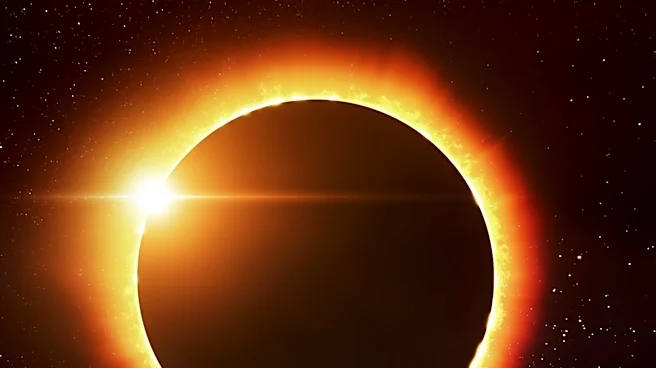
On August 12, 2026, a rare celestial event will occur, featuring a total solar eclipse and the peak of the Perseid meteor shower. The solar eclipse will be visible across parts of North America, the UK, Ireland, and continental Europe. The path of totality,
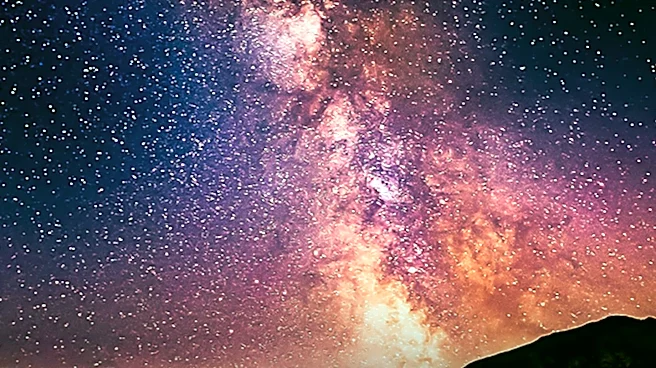
where the eclipse will be fully visible, will pass through Greenland, Iceland, and Spain. In North America, a partial eclipse will be visible, particularly in eastern Canada and the northeastern United States. As night falls, the Perseid meteor shower will peak, offering a display of shooting stars as Earth passes through debris left by comet Swift-Tuttle.
Why It's Important?
This event is significant as it combines two major astronomical phenomena, providing a unique opportunity for both amateur and professional astronomers to observe and study. The solar eclipse offers insights into solar and lunar dynamics, while the meteor shower provides data on cometary debris and atmospheric entry. For the public, it presents a chance to engage with astronomy and science, potentially inspiring future interest in these fields. Economically, such events can boost tourism in regions within the path of totality, as enthusiasts travel to witness the spectacle.
What's Next?
Observers are advised to prepare by acquiring certified solar eclipse glasses to safely view the eclipse. Communities within the path of totality may organize viewing events, potentially attracting visitors. Educational institutions and science centers might host workshops and talks to enhance public understanding of these phenomena. As the date approaches, weather forecasts will be crucial in determining the best viewing locations, and contingency plans may be necessary for areas with poor visibility.
Beyond the Headlines
The convergence of these events highlights the interconnectedness of celestial mechanics and the impact of cosmic events on Earth. It underscores the importance of scientific literacy and public engagement in understanding our place in the universe. Additionally, it raises awareness about the need for dark sky preservation to ensure optimal conditions for astronomical observations, free from light pollution.