







What's Happening?
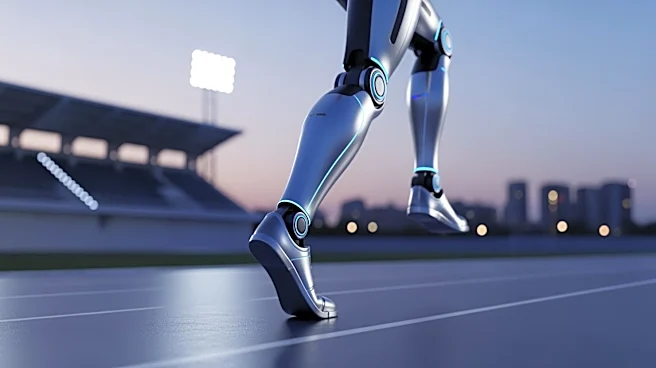
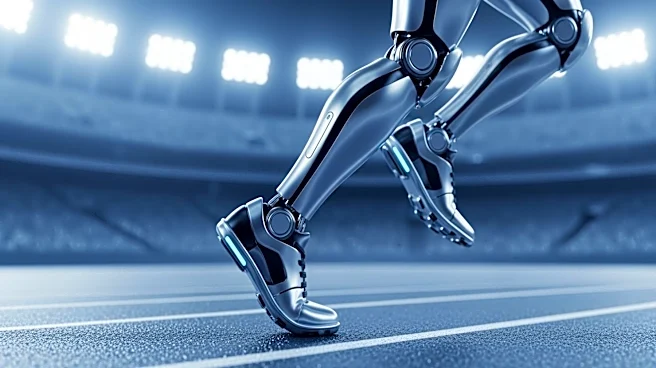
In a groundbreaking event at the Beijing half-marathon, humanoid robots have surpassed human running records, with the winning robot completing the race in 50 minutes and 26 seconds. This time is notably faster than the human world record of 57 minutes set
by Jacob Kiplimo. The event featured robots built by various companies, including the Chinese smartphone maker Honor, whose autonomous robot achieved the winning time. Although another Honor robot finished in 48 minutes and 19 seconds, it was remote-controlled, and thus, the autonomous robot was declared the winner based on weighted scoring. The race saw about 40% of the robots competing autonomously, while the rest were remote-controlled. Despite some robots facing challenges, such as falling at the start or hitting barriers, the event marked a significant improvement from the previous year, where the fastest robot completed the race in two hours and 40 minutes.
Why It's Important?
This event highlights the rapid advancements in robotics and artificial intelligence, showcasing the potential for robots to perform tasks traditionally dominated by humans. The ability of robots to surpass human athletic records could have far-reaching implications for industries reliant on speed and efficiency. It demonstrates the potential for robots to take on more complex roles in various sectors, including logistics, manufacturing, and even sports. The success of autonomous robots in such events could accelerate the development and integration of AI technologies in everyday life, potentially leading to increased productivity and new economic opportunities. However, it also raises questions about the future of human participation in activities where robots can outperform, potentially impacting employment and societal roles.
What's Next?
Following this event, it is likely that there will be increased interest and investment in the development of autonomous robots. Companies may focus on enhancing the capabilities of robots to perform a wider range of tasks with greater efficiency. Additionally, there could be discussions around the ethical implications of robots participating in human-centric activities and the potential need for regulations to govern such competitions. As technology continues to evolve, stakeholders, including policymakers, businesses, and the public, will need to consider the balance between innovation and the preservation of human roles in society.
Beyond the Headlines
The success of robots in the Beijing half-marathon could lead to a cultural shift in how society views athletic achievements and competitions. As robots become more capable, there may be a need to redefine what constitutes a 'record' and how achievements are celebrated. This development also poses ethical questions about the role of technology in human activities and the potential for robots to replace humans in various domains. The event could spark debates about the value of human effort and the importance of maintaining spaces where human skills and talents are prioritized.