



What's Happening?
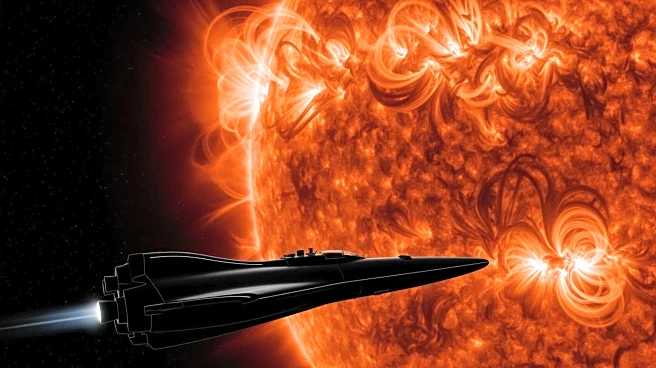
A significant solar flare, classified as an X1.4-class event, erupted from the Sun on March 29, 2026, raising concerns about its potential impact on the upcoming Artemis II mission. The flare, which is among the most intense types of solar storms, briefly
disrupted radio signals across parts of Asia and Australia. Despite the timing of this solar activity, NASA has confirmed that the Artemis II launch, scheduled for April 1, 2026, will proceed as planned. The Solar Dynamics Observatory captured the event, and NASA officials have assured that the coronal mass ejection (CME) associated with the flare is not expected to interfere with the mission. The mission management team has reviewed space weather data and determined that conditions remain within acceptable limits for the launch.
Why It's Important?
The Artemis II mission is a critical step in NASA's efforts to return humans to the Moon, marking the first crewed mission in the Artemis program. Ensuring the safety of astronauts is paramount, especially given the risks posed by solar radiation. The recent solar flare highlights the challenges of space travel beyond Earth's protective magnetic field. NASA's ability to monitor and respond to solar activity is crucial for the success of such missions. The agency's preparedness, including the implementation of radiation shelters within the spacecraft, underscores the importance of safeguarding astronauts from potential radiation exposure during lunar missions.
What's Next?
With the Artemis II launch proceeding as scheduled, NASA will continue to monitor space weather conditions closely. The mission includes a safety test where astronauts will practice setting up a radiation shelter inside their spacecraft, providing additional protection in case of unexpected radiation spikes. This proactive approach is part of NASA's broader strategy to ensure the safety and success of future lunar missions. As the launch date approaches, NASA will provide updates on weather conditions and any potential changes to the mission plan.