
What's Happening?
A significant development has emerged in the investigation of a high-speed train crash near Adamuz, Spain, which resulted in the deaths of at least 42 people. Investigators have discovered a large piece
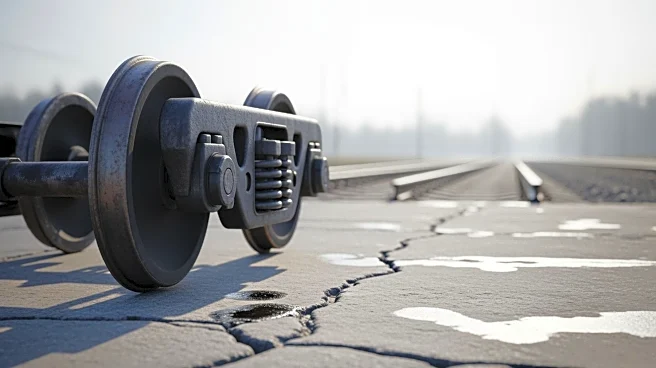
of metal near the crash site, suspected to be a missing bogie, a crucial component of the train's undercarriage. This piece is believed to be vital in understanding the cause of the derailment. The crash, one of Europe's largest, occurred in a remote area, and the investigation is being led by Spain's railway accident body, CIAF. The bogie, which serves as the main point of contact between the train and the tracks, was found submerged in a stream near the crash site. The Spanish Civil Guard had located the piece earlier but left it due to its weight. The investigation continues as authorities collect evidence to determine the exact cause of the accident.
Why It's Important?
The discovery of the missing bogie is crucial as it could provide insights into the mechanical failures that led to the derailment. This incident highlights the importance of railway safety and the potential risks associated with high-speed train travel. The crash has prompted Spain's train drivers' union, SEMAF, to call for a nationwide strike to demand improved safety measures. The outcome of this investigation could lead to significant changes in railway safety protocols, impacting not only Spain but potentially influencing international standards. The incident also raises concerns about the maintenance and inspection processes of high-speed trains, which are critical for preventing such tragedies.
What's Next?
As the investigation progresses, authorities are expected to analyze the bogie's condition and its role in the derailment. The findings could lead to recommendations for changes in train design or maintenance procedures. The nationwide strike planned by SEMAF could pressure the government to implement immediate safety measures. Additionally, the investigation's results may prompt other countries to review their railway safety standards, especially those operating high-speed trains. The international railway community will likely monitor the situation closely, as the findings could have broader implications for global railway safety practices.