




What's Happening?
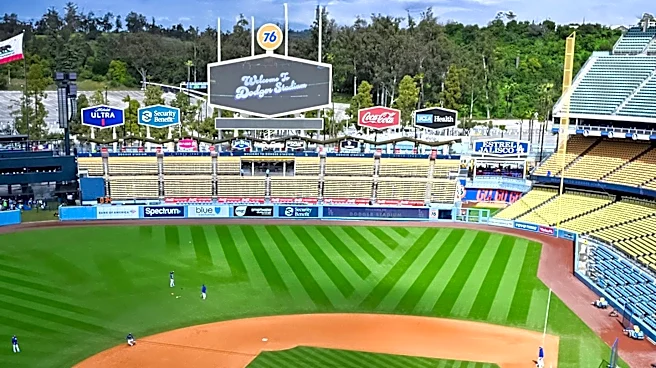
Loyola Marymount University has unveiled a new digital archive titled 'Chavez Ravine: An Unfinished Story,' which aims to preserve the history and memories of the Mexican American community that once resided in Chavez Ravine, Los Angeles. This area, home
to over 1,000 families, was cleared in the 1950s to make way for Dodger Stadium, leading to the forced eviction of its residents. The archive, co-founded by Carol Jacques and Priscilla Leiva, includes community-curated histories, images, and oral accounts. The project, which took 11 years to complete, is hosted by LMU’s William H. Hannon Library and allows donors to retain copyright of their personal photos. The archive serves as a digital repository for the community's history, ensuring that the stories of Chavez Ravine are not forgotten.
Why It's Important?
The digital archive is significant as it preserves the cultural and historical legacy of a community that was displaced due to urban development. By documenting the lives and experiences of Chavez Ravine residents, the archive provides a resource for future generations to understand the impact of eminent domain and urban renewal on minority communities. It highlights the resilience and cultural richness of the Mexican American community, countering narratives that labeled the area as a 'slum.' The project also underscores the importance of preserving marginalized histories in the face of urban expansion and gentrification, offering a platform for voices that have historically been silenced.
What's Next?
The digital archive will continue to grow as more former residents and their descendants contribute materials. It is expected to serve as a valuable resource for researchers, historians, and the public interested in the history of Los Angeles and the experiences of displaced communities. The archive may also inspire similar projects in other cities, encouraging the preservation of local histories that are at risk of being lost. Additionally, the archive could influence public policy discussions on urban development and the rights of communities facing displacement.