







What's Happening?
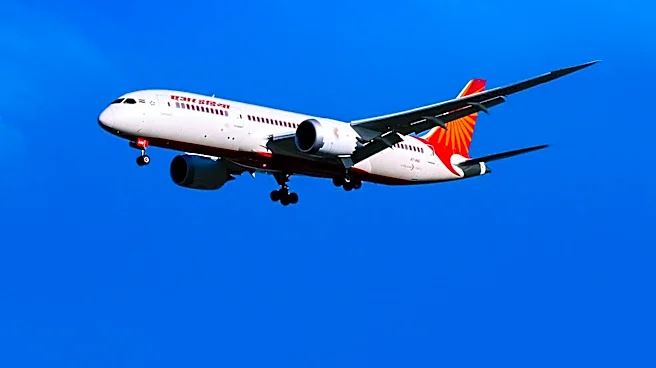
Air India has suspended employees after three Italian passengers bypassed immigration procedures at Delhi airport on September 4. The incident involved the passengers flying from Amritsar to Delhi on an Air India flight and subsequently boarding a Lufthansa
flight to Munich without completing the mandatory immigration clearance in Delhi. Civil Aviation Minister Ram Mohan Naidu confirmed that the Air India personnel responsible for escorting these passengers were found to be at fault, leading to their immediate suspension. The ministry had previously issued a show-cause notice to Air India on September 12 regarding this "serious security and immigration-related lapse." Following discussions with the airline's management, the ministry has also reviewed and strengthened wider passenger movement processes, including boarding card issuance, the role of Digi Yatra, and passenger flow through connecting airports, to prevent similar security breaches in the future. Despite the incident, the government plans to continue expanding the hub-and-spoke model for air travel.
Why It's Important?
This incident highlights critical vulnerabilities in airport security and immigration protocols, particularly concerning international transit passengers. The suspension of Air India staff underscores the accountability expected from airline personnel in ensuring adherence to established procedures. For the U.S., while the incident occurred in India, it serves as a reminder of the global interconnectedness of aviation security. Lapses in one part of the world can have broader implications for international travel and security standards. The review and strengthening of passenger movement processes by the Indian Civil Aviation Ministry reflect a proactive approach to mitigating risks, which could influence or be mirrored by other international aviation authorities. The incident also brings into focus the operational complexities of codeshare partnerships, such as that between Lufthansa and Air India, where seamless passenger transfers must not compromise security integrity. Maintaining robust security measures is paramount for passenger safety and national security, and any breach necessitates immediate and thorough corrective action.
What's Next?
Following the suspensions and the review of security protocols, Air India is expected to implement stricter internal controls and training for its staff involved in passenger handling, especially for international transfers. The Indian Civil Aviation Ministry will likely monitor the effectiveness of the newly strengthened security measures across all airports, particularly those operating under the hub-and-spoke model. There may be increased scrutiny on how airlines manage passenger transitions and immigration clearances, potentially leading to updated guidelines or regulations for all carriers operating in India. Other international airlines and aviation authorities may also review their own procedures in light of this incident to identify and address potential vulnerabilities in their systems. The focus will remain on ensuring that the expansion of air travel infrastructure and models, such as the hub-and-spoke system, does not come at the expense of robust security and immigration compliance.
Beyond the Headlines
The incident transcends a mere operational error, touching upon the broader implications of trust and efficiency in international air travel. The ability of passengers to bypass immigration, even inadvertently due to staff negligence, erodes confidence in the security framework of airports and airlines. This event could prompt a re-evaluation of the human element in security systems, emphasizing the need for continuous training, clear protocols, and accountability. It also highlights the challenges of managing complex passenger flows in a globalized aviation network, where multiple airlines and agencies interact. The balance between facilitating smooth travel and maintaining stringent security is delicate, and incidents like this underscore the constant need for vigilance and adaptation. Furthermore, the incident could lead to discussions about the standardization of immigration and security procedures across different countries and airlines to create a more uniformly secure global travel environment.