




What's Happening?
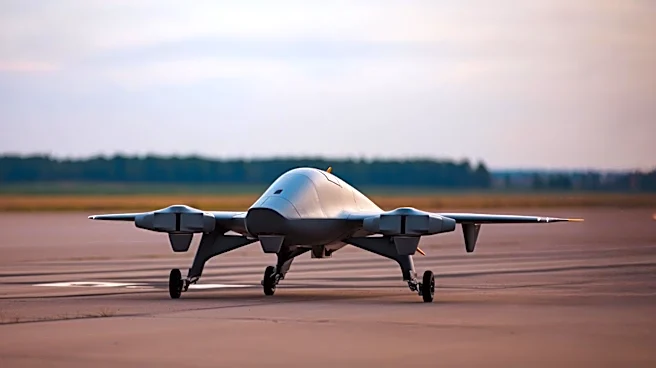
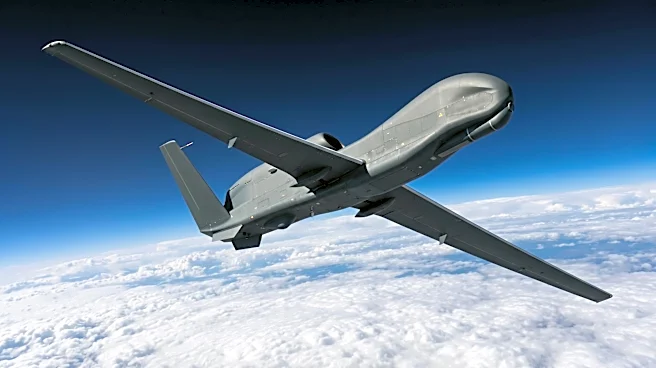
Northrop Grumman's YFQ-48A Talon Blue, a company-funded aircraft, has successfully completed its inaugural fully autonomous flight. This flight included taxiing, takeoff, in-flight maneuvers, and landing without human intervention. The YFQ-48A Talon Blue is part
of Northrop Grumman's Project Talon portfolio, an internal initiative focused on developing autonomous airpower capabilities. The aircraft's design emphasizes reduced production costs and shorter manufacturing timelines, achieved through changes that lowered part count and overall weight, without compromising mission effectiveness. Craig Woolston, vice president and general manager for research and advanced design at Northrop Grumman, stated that the company responded to customer demands for faster and more affordable autonomous systems. The Talon Blue features a high air intake, wide wheelbase, and an integrated weapons bay, designed to support flexible operational concepts and diverse mission requirements for both the U.S. and its allied partners. This milestone builds upon Northrop Grumman's extensive experience in autonomy, accumulated over seven decades and more than 500,000 autonomous flight hours.
Why It's Important?
The successful autonomous flight of the YFQ-48A Talon Blue marks a significant advancement in the development of autonomous air systems for defense. This technology is crucial for the U.S. military and its allies, as it promises to deliver mission-critical capabilities more rapidly and cost-effectively. By reducing production costs and manufacturing timelines, Northrop Grumman is addressing a key challenge in defense procurement, potentially enabling faster deployment of advanced aerial assets. The emphasis on flexible operational concepts and varied mission requirements suggests that this platform could be adapted for a wide range of defense applications, enhancing national security and operational readiness. The integration of features like a high air intake, wide wheelbase, and integrated weapons bay indicates a design optimized for diverse combat and surveillance roles. This development could lead to a new generation of unmanned aerial vehicles that are more versatile, affordable, and capable, ultimately strengthening the U.S.'s strategic advantage in autonomous warfare and potentially influencing future defense spending and procurement strategies.
What's Next?
Following this successful first flight, Northrop Grumman plans to leverage the lessons learned to further strengthen its broader autonomy work. The company anticipates that every flight and subsequent analysis will contribute to refining and advancing its autonomous systems. The Project Talon portfolio also includes Talon IQ, an autonomous testbed utilizing the Scaled Composites Model 437 aircraft, powered by Northrop Grumman’s Prism Mission Autonomy software. This testbed offers a government reference architecture aimed at accelerating autonomy development. The combination of Talon Blue and Talon IQ is expected to provide Northrop Grumman and its partners with enhanced capabilities to develop, test, and field autonomous solutions that can adapt to evolving threats and operational needs. This ongoing development suggests a continuous push towards more sophisticated and adaptable autonomous systems, with future iterations likely incorporating further technological advancements and operational feedback to meet the dynamic demands of modern defense.
Beyond the Headlines
The development of fully autonomous aircraft like the YFQ-48A Talon Blue raises profound implications for the future of warfare and defense ethics. The ability to deploy systems that can execute complex missions without direct human control introduces questions about accountability, decision-making in combat, and the potential for unintended consequences. While proponents highlight increased efficiency, reduced risk to human pilots, and cost-effectiveness, critics often voice concerns about the ethical boundaries of autonomous lethal weapons. This technological leap could also reshape international arms control discussions and the balance of power, as nations race to develop and integrate similar capabilities. Furthermore, the focus on reducing production costs and accelerating timelines could democratize access to advanced autonomous systems, potentially leading to wider proliferation and new challenges in global security. The long-term societal impact of increasingly autonomous military technology, including its influence on employment in defense sectors and the psychological effects on military personnel, will also be significant areas of consideration.