




What's Happening?
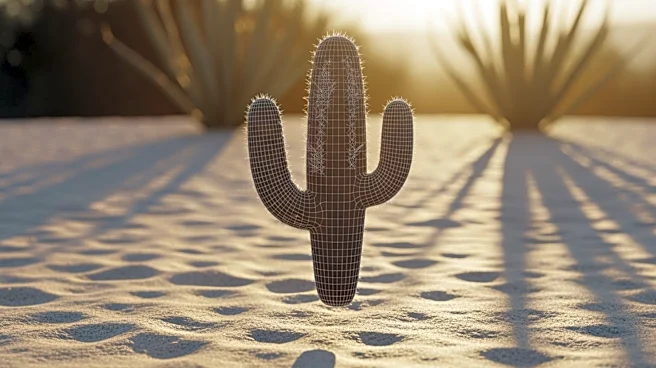
The Desert Botanical Garden in Phoenix, Arizona, has launched an innovative art and data project called 'Framerate: Desert Pulse' in collaboration with ScanLAB Projects, a London-based artist group. This project utilizes lidar technology, commonly used
in self-driving cars, to create detailed 3D scans of the Sonoran Desert's unique landscape. Over the course of a year, millions of laser pulses were fired into the desert, capturing the growth and changes in cacti and other desert flora. The scans document the life cycle of these plants, including a significant event where a giant saguaro cactus fell, providing a poignant moment for the researchers involved. The project aims to highlight the rich biodiversity of the desert and the impact of human activities, such as housing developments and agriculture, on this fragile ecosystem.
Why It's Important?
This project is significant as it combines art and science to raise awareness about the Sonoran Desert's ecological importance and the threats it faces. The detailed 3D scans provide invaluable data for conservation efforts, offering insights into plant growth patterns and environmental changes. By visualizing the desert's dynamic ecosystem, the project encourages public engagement and understanding of environmental issues. The data collected could inform future conservation strategies, helping to protect the desert's biodiversity. Additionally, the project serves as a cautionary tale about human impact on natural landscapes, urging more sustainable practices.
What's Next?
The data from the 3D scans will be analyzed to explore potential adaptive behaviors of desert plants, such as the agave's leaf movements. This information could lead to new conservation techniques and strategies to protect the desert's flora and fauna. The project also sets a precedent for using art and technology in environmental conservation, potentially inspiring similar initiatives in other regions. As the data is further studied, it may contribute to scientific research and publications, enhancing our understanding of desert ecosystems and informing policy decisions.
Beyond the Headlines
The project highlights the intersection of art, technology, and environmental science, showcasing how creative approaches can contribute to ecological preservation. It raises ethical questions about human responsibility in environmental stewardship and the role of technology in documenting and mitigating ecological damage. The immersive art installation not only educates the public but also fosters a deeper emotional connection to the natural world, potentially influencing cultural attitudes towards conservation.