



What's Happening?
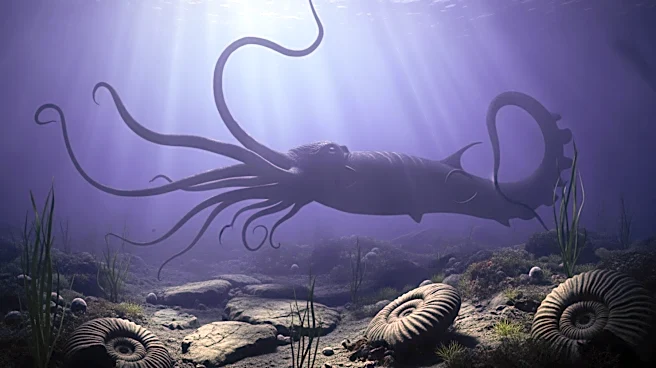
Recent research has uncovered fossils of a giant octopus species, Nanaimoteuthis haggarti, which lived during the Cretaceous Period, approximately 86 to 72 million years ago. These fossils, found in Japan and Canada, suggest that this species could grow
up to 61 feet long, challenging the previous understanding that ancient oceans were dominated solely by large vertebrate predators. The study, led by paleontologist Yasuhiro Iba of Hokkaido University, indicates that these octopuses were apex predators, competing with marine reptiles and sharks for dominance in their ecosystems.
Why It's Important?
The discovery of the 'Cretaceous Kraken' provides new insights into the diversity and complexity of ancient marine ecosystems. It challenges the traditional view that vertebrates were the sole apex predators, highlighting the role of invertebrates in prehistoric food webs. This finding could lead to a reevaluation of ecological dynamics during the Cretaceous Period, influencing how scientists understand evolutionary processes and predator-prey relationships. The research also underscores the importance of fossil studies in uncovering the hidden history of life on Earth.