








What's Happening?
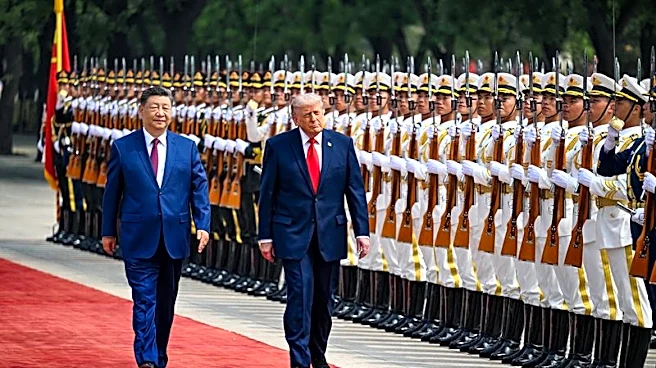
Chinese economist Keyu Jin provided insights into the recent summit between President Trump and Chinese President Xi Jinping, focusing on trade relations between the two nations. The summit aimed to stabilize trade tensions and improve communication,
with China adopting a transactional approach similar to President Trump's. Key topics included increased purchases of American goods like airplanes and soybeans, and discussions on investment access for American banks. Jin highlighted China's desire for respect, reciprocity, and realism in trade, while acknowledging the technological divergence between the two countries. Despite economic challenges, China's tech sector is booming, though it cannot yet replace real estate as a primary growth driver.
Why It's Important?
The summit's outcomes are significant for U.S.-China relations, impacting global trade dynamics and economic strategies. The focus on transactional trade agreements could lead to increased U.S. exports to China, benefiting American industries such as agriculture and aerospace. However, the technological divergence poses challenges, as both nations pursue separate paths in tech development. This could affect global tech markets and innovation. The summit also underscores the importance of maintaining open communication channels to manage competition and avoid further trade conflicts, which could have broader economic implications.
What's Next?
Future developments may include further negotiations on trade agreements and investment opportunities. Both countries are likely to continue exploring ways to balance competition with cooperation, particularly in technology and finance. The U.S. may seek to expand its market presence in China, while China will likely continue its global tech expansion. Stakeholders, including businesses and policymakers, will closely monitor these developments to adapt strategies and capitalize on emerging opportunities.