
What's Happening?
President Donald Trump has reignited discussions about the United States acquiring Greenland from Denmark, a proposal that has been met with skepticism and historical debate. Trump has framed the U.S. relationship with Greenland as one where America 'saved'
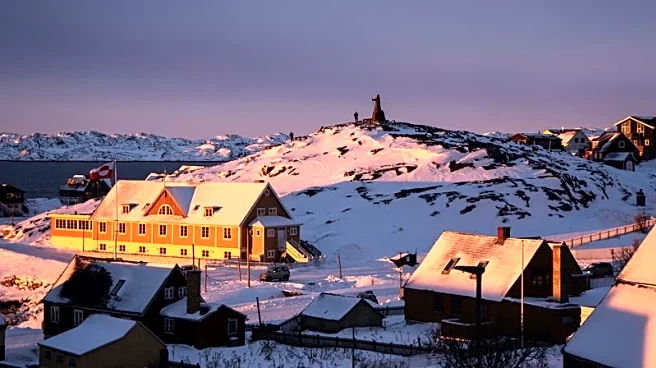
the territory and made a 'stupid' mistake by not retaining it post-World War II. This narrative has been challenged by historians who argue that it distorts historical facts. The U.S. has shown interest in Greenland since the 19th century, with attempts to purchase it dating back to the 1860s. Despite Trump's claims of negotiating a framework for acquisition, Denmark and Greenland have resisted such proposals, emphasizing their sovereignty and historical ties. Greenland, an autonomous territory within the Kingdom of Denmark, has strategic importance due to its location and resources, but only a small percentage of its population supports joining the U.S.
Why It's Important?
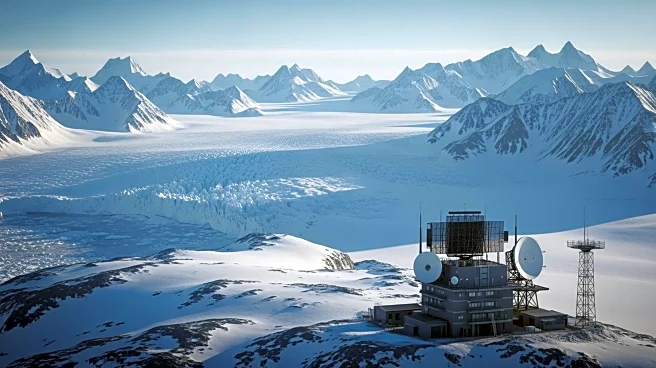
The proposal to acquire Greenland highlights the strategic importance of the territory, which is rich in natural resources and holds a key geographic position for military and economic interests. The U.S. military base in Greenland is crucial for missile defense and space surveillance. Trump's interest in Greenland also reflects broader geopolitical concerns, including the influence of China and Russia in the Arctic region. However, the proposal has strained U.S.-Danish relations and raised questions about the respect for national sovereignty and self-determination. The debate underscores the complexities of international diplomacy and the challenges of balancing strategic interests with historical and cultural considerations.
What's Next?
While President Trump has suggested a framework for acquiring Greenland, significant diplomatic hurdles remain. Denmark and Greenland have consistently opposed the idea, and any change in status would require extensive negotiations and likely face international scrutiny. The U.S. may continue to seek ways to strengthen its presence and influence in the Arctic through diplomatic and economic means rather than outright acquisition. The situation could lead to further discussions within NATO, as Greenland's strategic position is vital to the alliance's security interests. The outcome of these discussions could shape future U.S. foreign policy and its approach to Arctic geopolitics.
Beyond the Headlines
The debate over Greenland's status raises broader questions about the ethics of territorial acquisition in the modern era. It challenges the notion of sovereignty and the rights of indigenous populations in determining their political future. The historical context of U.S. attempts to purchase Greenland reflects a long-standing interest in expanding American influence, but it also highlights the need for respectful and equitable international relations. The situation may prompt a reevaluation of how nations engage with territories that hold strategic value, balancing national interests with global cooperation and respect for historical ties.