


What's Happening?
Honda is partnering with space infrastructure firm Redwire to develop an automated laboratory support system designed for future commercial space stations. This collaboration aims to address the critical limitation of astronaut time on space stations,
where highly skilled individuals often spend valuable hours on mundane tasks like inventory management and biological sample handling. Redwire is contributing its Space Technology Autonomous Agile Robotic Kit (STAARK), a reaching/motion platform capable of autonomously interacting with and grasping dynamic objects. Honda, known for its advancements in robotics, is providing its expertise in detailed robotic manipulation, specifically developing a robotic hand with independently articulated fingers equipped with tactile and force sensors. This advanced hand will allow the robot to handle delicate samples without damage. The concept was introduced via a press release and will be showcased at the International Astronautical Congress (IAC) in Antalya, Turkey.
Why It's Important?
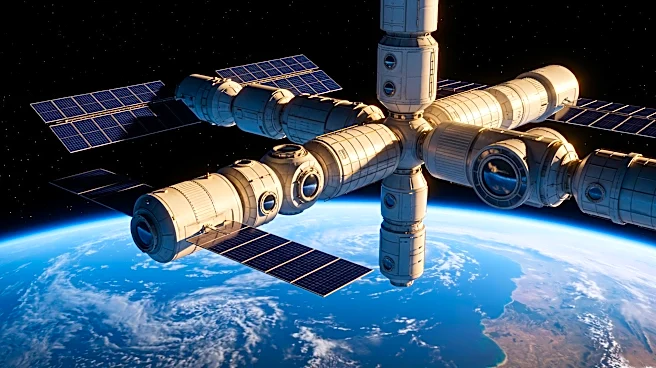
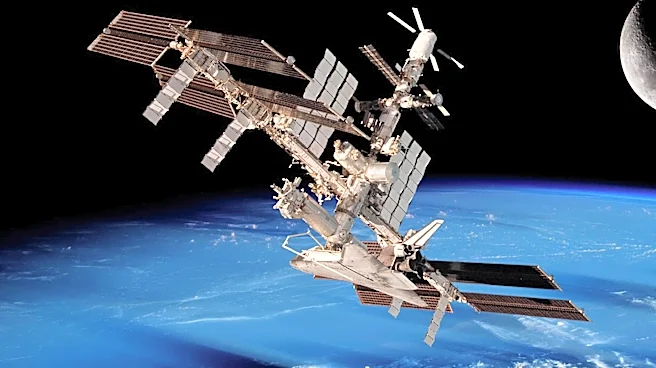
The development of robotic lab assistants is crucial for the efficiency and productivity of future commercial space stations. As NASA plans to deorbit the International Space Station (ISS) around 2030, private companies are preparing to launch smaller, often uncrewed for extended periods, commercial stations. In these environments, astronaut time will be even more limited, making automation essential for continuous scientific research. By automating routine laboratory tasks, astronauts can focus on more complex experiments and critical mission objectives, maximizing the scientific output of space missions. This initiative also highlights the growing trend of commercialization in space, where private companies are not only building stations but also developing the necessary infrastructure and support systems to make them operational and profitable. The success of such robotic systems could significantly reduce operational costs and increase the volume of research conducted in microgravity.
What's Next?
While the concept has been introduced, it will be some time before the Honda/Redwire robotic lab assistant is deployed in space. Early commercial space stations, such as Haven-1 from Vast and Axiom Station from Axiom Space, are theoretically set to launch as early as next year, but no agreements have been announced for them to adopt this specific robotic setup. The companies will likely continue to refine the technology and seek partnerships with commercial space station operators. The International Astronautical Congress (IAC) serves as a platform for showcasing the technology and engaging with potential clients and partners in the burgeoning space automation industry. The future will see increased competition among various automation solutions as the demand for efficient and autonomous operations on commercial space stations grows.
Beyond the Headlines
This collaboration signifies a broader shift towards increased automation and artificial intelligence in space exploration. The reliance on robots for routine tasks not only frees up astronaut time but also enhances safety by performing hazardous or repetitive operations. In the long term, advanced robotics could enable fully autonomous research facilities in space, operating without human intervention for extended periods. This could lead to breakthroughs in materials science, medicine, and other fields by allowing continuous experimentation in microgravity. Furthermore, the development of sophisticated robotic manipulation and sensing capabilities for space applications could have spillover benefits for terrestrial robotics, impacting industries such as manufacturing, healthcare, and logistics. The ethical implications of increasingly autonomous systems in space, including decision-making and potential for errors, will also become a more prominent discussion point.