
What's Happening?
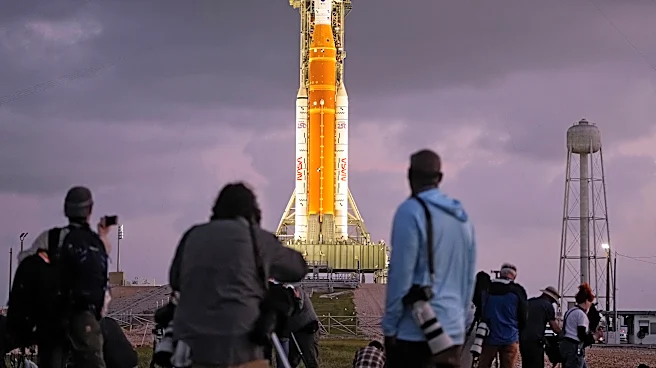
Lucas Ye, an 8-year-old from California, designed a 'zero gravity indicator' toy that is now aboard NASA's Artemis II mission. The toy, named 'Rise,' will help astronauts determine when they have reached weightlessness during their journey to orbit the moon.
Lucas won an international competition to design the toy, which features a moon wearing a baseball cap with Earth and stars. The tradition of using plush toys as zero gravity indicators dates back to the 1961 Vostok 1 mission. Lucas's design was selected from over 2,600 entries from more than 50 countries.
Why It's Important?
Lucas Ye's involvement in the Artemis II mission highlights the importance of engaging young people in STEM fields and space exploration. By participating in the competition, Lucas has gained valuable experience and exposure to the world of space science. His success serves as an inspiration to other young students, demonstrating that creativity and innovation can lead to real-world applications. The use of a toy designed by a child on a major space mission underscores the value of diverse perspectives and ideas in scientific endeavors.
What's Next?
As the Artemis II mission continues, Lucas Ye's toy will serve as a reminder of the importance of engaging young people in space exploration. NASA may continue to host similar competitions, encouraging students worldwide to contribute their ideas to future missions. The success of Lucas's design could lead to increased interest in STEM education and inspire other young students to pursue careers in science and engineering. The Artemis program's progress will likely influence educational initiatives and public engagement in space exploration.