





What's Happening?
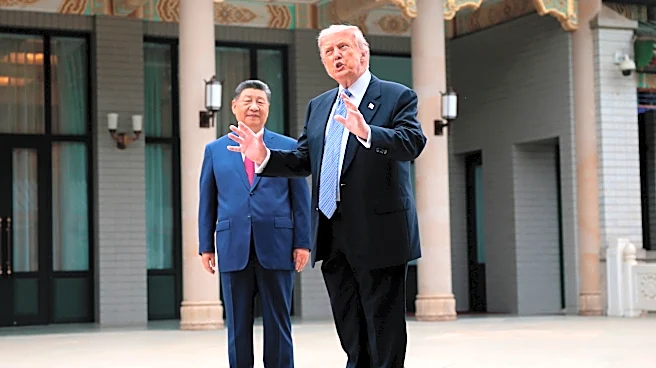
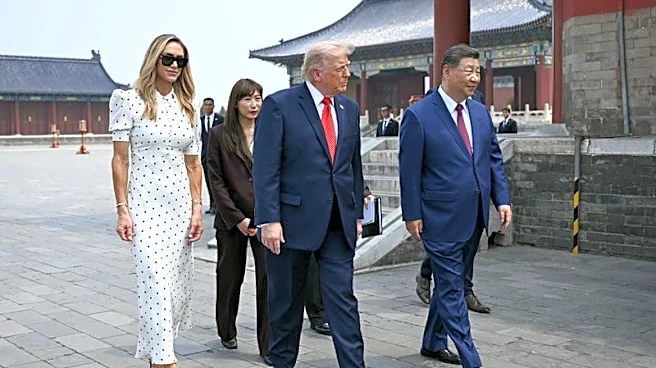
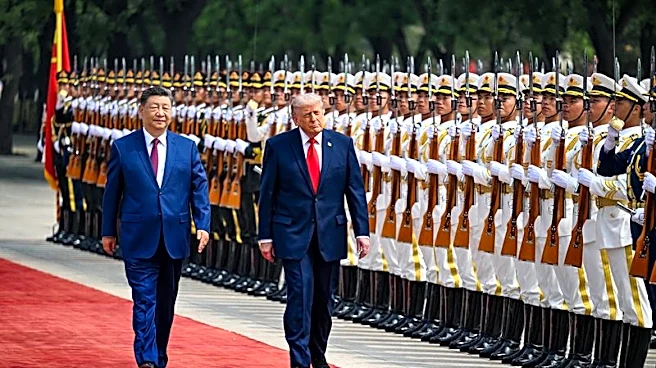
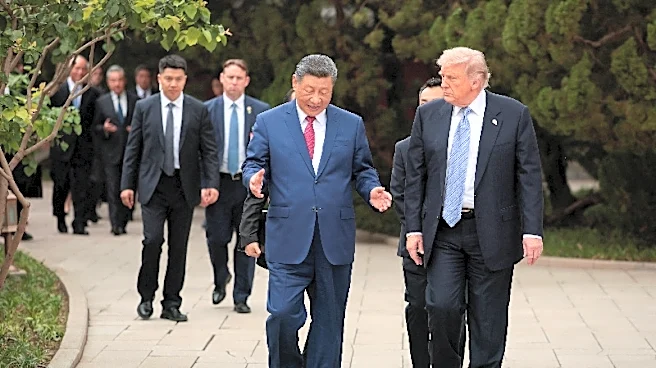
President Trump recently concluded a summit in Beijing with Chinese President Xi Jinping, marked by grand ceremonies but limited substantive achievements. The summit, which included a state banquet and discussions on key issues like the ongoing conflict
in Iran and the strategic situation in Taiwan, was characterized by its emphasis on symbolism over concrete results. Despite the pageantry, the summit did not produce a swift resolution to the Iran conflict or a clear strategy regarding Taiwan. Discussions also touched on potential commercial deals, including agricultural purchases and aircraft sales, but these remained vague. The summit was seen as an attempt to manage rather than resolve the complex issues between the U.S. and China.
Why It's Important?
The summit's outcomes, or lack thereof, have significant implications for U.S. foreign policy and economic interests. The ongoing conflict in Iran, which has disrupted global oil supplies and raised prices, remains unresolved, affecting the U.S. economy and President Trump's approval ratings. The lack of a clear stance on Taiwan could lead to increased tensions in the region, potentially impacting U.S. strategic interests. The vague commercial agreements, if realized, could benefit U.S. farmers and the aerospace industry, but the lack of confirmation from China raises questions about their viability. The summit highlights the challenges in U.S.-China relations, where symbolic gestures often overshadow substantive policy advancements.
What's Next?
Future developments will likely focus on whether the proposed commercial deals materialize and how the U.S. navigates its strategic interests in Taiwan and Iran. The U.S. administration may face pressure to clarify its stance on Taiwan and to secure tangible outcomes from its diplomatic engagements with China. The potential for increased agricultural exports and aircraft sales could provide economic benefits, but these depend on China's follow-through. Additionally, the U.S. will need to address the broader implications of its foreign policy decisions on domestic economic conditions and international relations.
Beyond the Headlines
The summit underscores the complex dynamics of U.S.-China relations, where diplomatic engagements are often more about managing perceptions than achieving concrete results. The emphasis on symbolism reflects a broader trend in international diplomacy, where leaders seek to project strength and stability despite underlying tensions. The summit also highlights the challenges of balancing economic interests with strategic and security concerns, particularly in regions like the Middle East and East Asia. The U.S. must navigate these complexities while addressing domestic political pressures and maintaining its global leadership role.