



What's Happening?
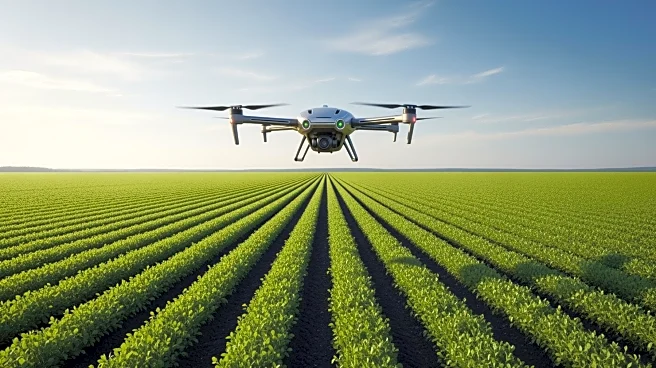
Uzbekistan is advancing its agricultural sector by integrating unmanned aerial vehicles (UAVs) into its farming practices. During the Agriculture Workers' Day ceremony, President Shavkat Mirziyoyev announced new initiatives aimed at supporting intensive
horticulture and stabilizing food prices. The country plans to receive 50 additional agricultural drones from China in 2026, enhancing its current fleet used for crop monitoring and agrotechnical tasks. The Ministry of Agriculture has established a drone service center, and the payload capacity of these drones will be increased from 100 kg to 250 kg. Furthermore, Uzbekistan is investing $100 million to convert drainage and collector channels into a closed system, which will reduce maintenance costs and increase arable land. The government is also focusing on scientific advancements by establishing an Academy of Agricultural Sciences and training 8,000 agricultural specialists annually in modern technologies.
Why It's Important?
This development is significant as it represents Uzbekistan's commitment to modernizing its agricultural sector through technology. By adopting UAVs and digital technologies, the country aims to increase crop yields and reduce costs, which is crucial for ensuring food security and economic stability. The initiative also highlights Uzbekistan's efforts to become a leader in agricultural innovation in the region. The investment in infrastructure and education will likely enhance the skills of local farmers, making them more competitive in the global market. This move could attract foreign investment and partnerships, further boosting the country's agricultural output and economic growth.
What's Next?
Uzbekistan's focus on agricultural technology is expected to continue with the establishment of the Academy of Agricultural Sciences, which will oversee research and development in the sector. The training of 8,000 specialists annually will likely lead to a more skilled workforce capable of implementing advanced farming techniques. Additionally, the conversion of drainage channels will expand the amount of land available for cultivation, potentially increasing the country's agricultural production. The involvement of international agronomists in training programs suggests that Uzbekistan is open to global collaboration, which could lead to further technological advancements and innovations in its agricultural practices.