






What's Happening?
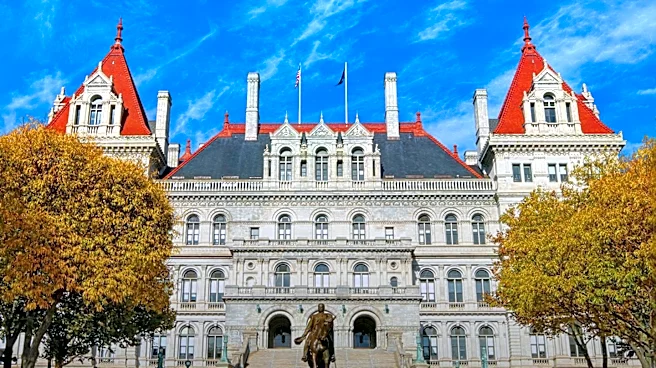
Albany is officially recognized as the capital city of New York State, serving as the central hub for legislative power and policy-making. Despite New York City's global prominence, Albany holds the constitutional designation as the seat of state government,
where the New York State Legislature operates. Lawmakers in Albany debate and pass legislation that impacts the daily lives of millions of New Yorkers, covering crucial areas such as housing, education, transportation, and public safety. The city's political calendar is structured around legislative sessions, typically held annually from January through May, during which numerous public hearings and policy negotiations determine the state's trajectory. This concentration of governmental institutions ensures efficient coordination between policy creation and implementation.
Why It's Important?
Albany's role as the capital is fundamentally important because it is where the legislative and executive branches of New York State government converge to create and enforce laws. This centralized function ensures that policies affecting the entire state are deliberated and decided in one location, fostering efficiency and coordination. The decisions made in Albany have direct and significant impacts on all New Yorkers, influencing everything from economic regulations and environmental protections to social services and infrastructure development. The city's historical designation as the capital, chosen for its strategic geographic location and symbolic balance, underscores its enduring significance in the state's political identity. Without Albany's function as the capital, the governance of New York State would lack a cohesive and centralized operational core.
What's Next?
As the capital, Albany will continue to be the focal point for New York State's legislative and policy agenda. Upcoming legislative sessions will see lawmakers addressing current challenges and future opportunities, with ongoing debates on critical issues. The city will remain the primary location for state agencies, judicial functions, and the Governor's Office, ensuring the continuous operation of state government. Public engagement, including town halls and legislative hearings, will continue to be a vital part of the policy-making process. The city's infrastructure and services will also continue to support the demands of being a state capital, accommodating government employees, lobbyists, and citizens participating in the political process.
Beyond the Headlines
Beyond its administrative function, Albany's role as the capital embodies deeper aspects of New York's democratic process and civic identity. It represents a deliberate choice to balance power away from the commercial dominance of New York City, ensuring that governance is rooted in a location accessible and representative of the broader state. The city's historical architecture, such as the New York State Capitol, serves as a tangible symbol of democratic ideals and continuity. Furthermore, Albany fosters a unique community deeply engaged with governance, where public policy debates extend beyond legislative chambers into local civic centers and schools. This engagement reinforces transparency and trust in democratic processes, highlighting the capital's role not just as a seat of power, but as a living testament to representative democracy.