




What's Happening?
Glacier Bay National Park in Alaska has announced its operating schedule for the 2026 main visitor season, running from late May through early September. During this period, Glacier Bay Lodge, which includes the visitor center, will be open from May 21
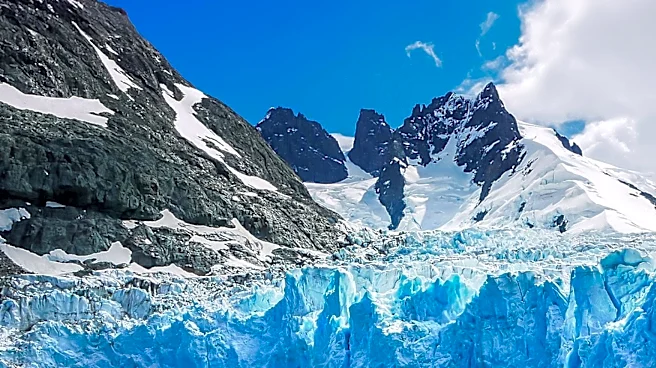
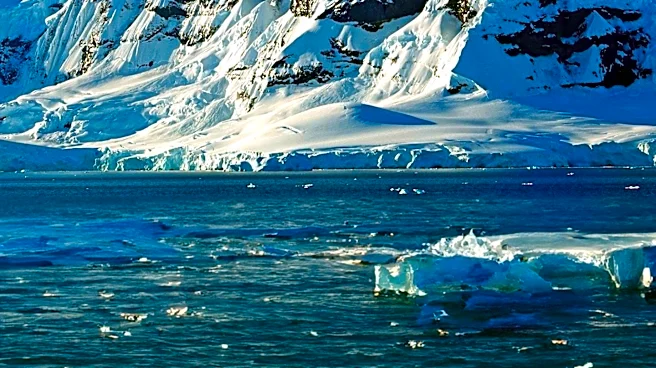
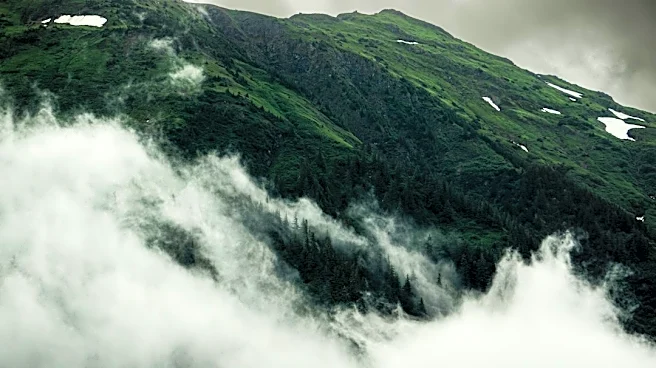
to September 8, and the daily tour boat will operate from May 22 to September 7. Services are minimal outside these dates. The park, a 65-mile-long fjord system, was largely ice-covered in 1794 when Captain George Vancouver explored it. Since then, its glaciers have retreated at an exceptionally fast rate, allowing forests, wildlife, and human settlements to expand into the newly exposed areas. The region was designated a national monument in 1925, became a national park and preserve in 1980, and was recognized as part of a UNESCO World Heritage Site in 1992. It is also the ancestral land of the Huna Tlingit people.
Why It's Important?
The rapid retreat of glaciers in Glacier Bay National Park highlights significant environmental changes occurring in Alaska, offering a tangible example of climate-related impacts. This phenomenon affects not only the physical landscape but also the ecosystems, influencing wildlife habitats and the availability of resources for indigenous communities like the Huna Tlingit, whose ancestral lands are within the park. The park's status as a national park and UNESCO World Heritage Site underscores its global ecological and cultural importance. The operational schedule for 2026 is crucial for the tourism industry in Southeast Alaska, particularly for towns like Gustavus and Juneau, which serve as gateways to the park. The minimal services outside the main season emphasize the challenges and unique considerations for managing visitor access and conservation efforts in remote, environmentally sensitive areas.
What's Next?
Visitors planning to explore Glacier Bay National Park outside the main season (late May to early September) should anticipate minimal services, as the lodge, day boat, and most programs will be closed. Those visiting during the peak season are advised to check NPS.gov for current visitor center hours and to book accommodations and tours in advance due to high demand. The ongoing glacier retreat will likely continue to reshape the park's landscape, potentially leading to further ecological shifts and new opportunities for scientific research and conservation strategies. Future management plans will need to address the evolving environment, balancing visitor experience with the preservation of natural and cultural resources, including the ancestral heritage of the Huna Tlingit.
Beyond the Headlines
The story of Glacier Bay National Park extends beyond its operational dates and scenic beauty, touching upon profound themes of environmental change, indigenous heritage, and the delicate balance between human interaction and natural preservation. The dramatic glacier retreat serves as a powerful visual narrative of broader climate trends, prompting reflection on long-term ecological consequences and the urgency of conservation efforts. For the Huna Tlingit, the changing landscape represents a dynamic relationship with their ancestral homeland, where cultural practices and traditional knowledge are intertwined with the environment. The park's designation as a UNESCO World Heritage Site also places it within a global context of shared natural and cultural patrimony, emphasizing international responsibility for its protection and study. This ongoing transformation offers a living laboratory for understanding environmental resilience and adaptation.