




What's Happening?
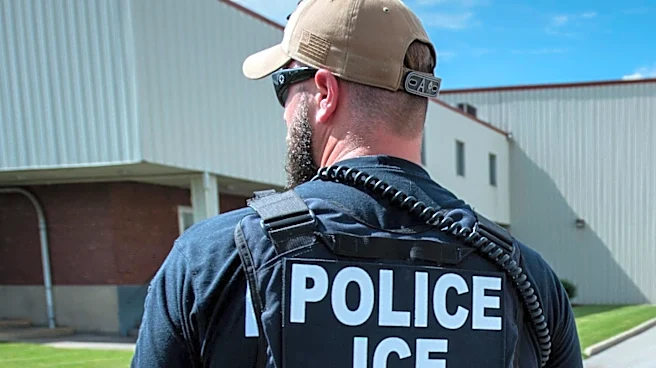
U.S. Immigration and Customs Enforcement (ICE) has adopted new strategies to increase arrest numbers, resulting in a record high of 51,000 arrests in July, the highest monthly total under the Trump administration. These tactics include arresting individuals
at airports and setting up checkpoints in public areas like national forests. Despite the increase in arrests, ICE has not met the administration's goal of 2,000 arrests per day. Many of those arrested are non-criminals caught in legal gray areas, such as expired visas while applying for new legal status. The Department of Homeland Security (DHS) has stated that these efforts are part of a broader strategy to enforce immigration laws more strictly.
Why It's Important?
The increase in ICE arrests highlights the Trump administration's focus on immigration enforcement, which has significant implications for U.S. immigration policy and affected communities. The tactics used by ICE have raised concerns among immigration advocates and legal experts, who argue that the focus on arrest numbers may not align with the broader goal of deporting individuals with criminal records. The economic impact is also notable, as stricter visa rules could deter international students and researchers, potentially costing the U.S. economy billions. The situation underscores the ongoing debate over immigration policy and its effects on society and the economy.
What's Next?
As ICE continues to implement these tactics, legal challenges and public protests are likely to increase. The U.S. Supreme Court is expected to rule on the legality of mandatory detention policies, which could influence future enforcement strategies. Additionally, the introduction of new visa rules in September may lead to further arrests and legal challenges. Stakeholders, including immigration advocates, legal experts, and affected communities, will likely continue to push for policy changes and greater oversight of ICE practices.
Beyond the Headlines
The aggressive enforcement tactics by ICE may have long-term cultural and social implications, potentially affecting the perception of the U.S. as a welcoming destination for immigrants and international scholars. The use of public spaces for immigration enforcement could also discourage people from visiting these areas, impacting local communities and economies. The ethical considerations of targeting non-criminals and the potential for racial profiling are also significant concerns that may shape future policy discussions.