







What's Happening?
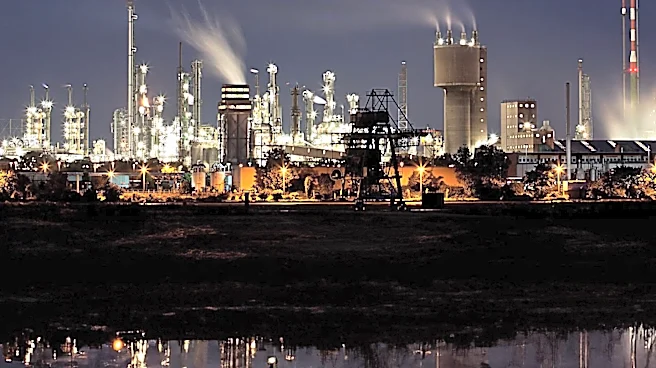
Aramco, a Saudi Arabia-based oil company, has become a significant presence in Port Arthur, Texas, following its acquisition of the Motiva oil refinery in 2017. The refinery, the largest in the U.S., has been linked to various environmental and health
issues in the area. Residents of Port Arthur, a city with a high poverty rate and predominantly Black community, report elevated cancer rates and other health problems, which they attribute to emissions from the refinery. Despite Aramco's sponsorship of the 2026 World Cup, local residents feel neglected, as the company has not visibly contributed to improving local infrastructure or addressing environmental concerns. Environmental activist Hilton Kelley and others have criticized the lack of local employment opportunities and the ongoing pollution issues.
Why It's Important?
The situation in Port Arthur highlights the broader implications of corporate responsibility and environmental justice. The community's struggles underscore the need for stricter environmental regulations and corporate accountability, especially in marginalized areas. Aramco's sponsorship of the World Cup contrasts sharply with the conditions in Port Arthur, raising questions about the ethical responsibilities of multinational corporations. The health and economic challenges faced by Port Arthur residents reflect a larger pattern of environmental racism, where minority communities disproportionately bear the brunt of industrial pollution. This case could influence future policies on corporate environmental practices and community engagement.
What's Next?
Residents and activists in Port Arthur are likely to continue advocating for better environmental practices and corporate accountability. Potential legal actions and increased public pressure could lead to more stringent regulations and enforcement by environmental agencies. Aramco may face growing scrutiny over its operations and sponsorships, prompting it to address community concerns more proactively. The situation could also inspire broader movements for environmental justice and corporate responsibility, influencing policy changes at both state and national levels.
Beyond the Headlines
The Port Arthur case illustrates the complex interplay between economic development and environmental sustainability. It raises ethical questions about the responsibilities of corporations to the communities they impact, particularly in terms of health and economic equity. The ongoing pollution and health issues in Port Arthur could serve as a catalyst for broader discussions on environmental justice and the need for systemic change in how industrial activities are regulated and managed. This situation also highlights the potential for grassroots activism to drive change and hold powerful entities accountable.