






What's Happening?
NASA's Jet Propulsion Laboratory (JPL) in Southern California is actively involved in the Artemis II mission, which launched on April 1, 2026. The Space Flight Operations Facility at JPL operates the Deep Space Network (DSN), a critical component for communicating
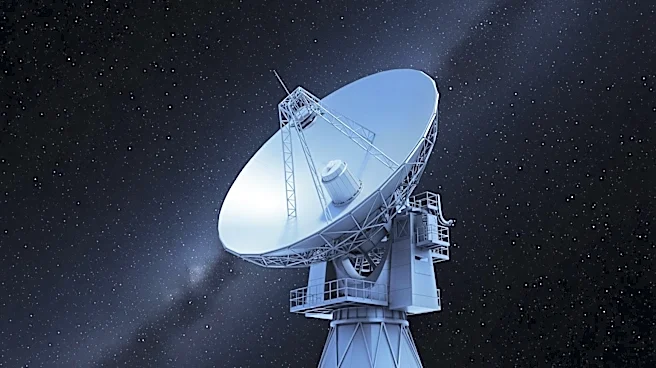
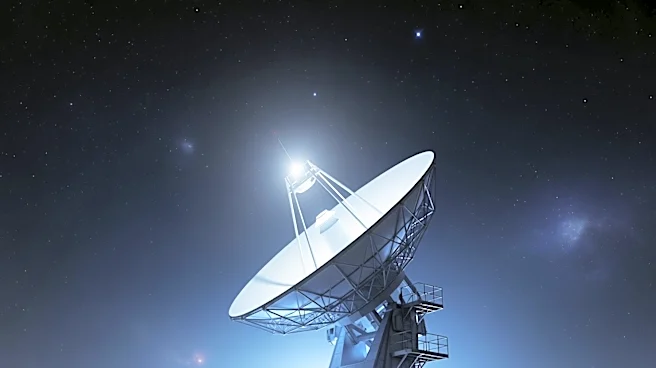
with spacecraft exploring the solar system. The DSN consists of complexes in Goldstone, California; Madrid, Spain; and Canberra, Australia, equipped with radio frequency antennas. These facilities enable the tracking, command, and data reception from the Artemis II mission and other spacecraft. JPL manages the DSN for NASA's Space Communications and Navigation program, ensuring seamless communication with distant missions.
Why It's Important?
The Artemis II mission represents a significant step in NASA's efforts to return humans to the Moon and eventually explore Mars. The DSN's role in facilitating communication is crucial for mission success, allowing for real-time data exchange and command operations. This infrastructure supports not only Artemis II but also numerous other missions, highlighting its importance in NASA's broader space exploration strategy. The successful operation of the DSN ensures that scientific data from these missions can be collected and analyzed, contributing to advancements in space science and technology.
What's Next?
As Artemis II progresses, NASA will continue to rely on the DSN for communication and data acquisition. The mission's success could pave the way for future crewed missions to the Moon and beyond, with the DSN playing a vital role in supporting these endeavors. NASA's ongoing investment in the DSN and related technologies will be essential for maintaining and expanding its capabilities, ensuring that future missions can be supported effectively. The outcomes of Artemis II will likely influence planning and development for subsequent Artemis missions.