




What's Happening?
Panamanian President José Raúl Mulino has announced significant investments exceeding $32 million for the rehabilitation and expansion of potable water treatment plants in the Azuero region. Specifically, he delivered orders for the Roberto Reyna water treatment plant in Chitré
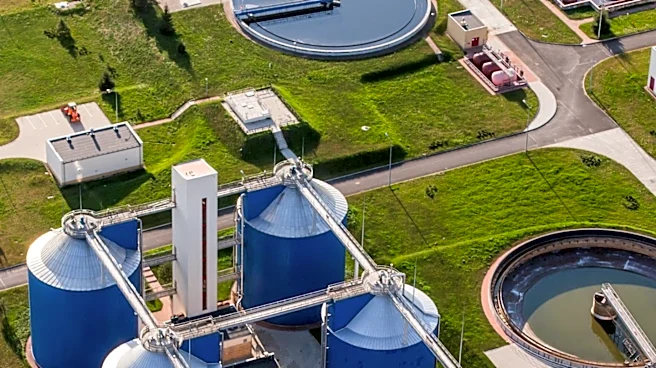
and improvements to the Rufina Alfaro plant in Los Santos. The Roberto Reyna plant project, with an investment of $22,484,500 and a 905-day execution period, will involve rehabilitating the plant and water intake, upgrading pumping equipment, pipes, and valves, and adding a new treatment train to increase production to a minimum of 12 million gallons daily. The Rufina Alfaro plant improvements, costing $4,975,500, include a new impulse line to two 250,000-gallon tanks, valve installations, flow measurement, telemetry, and replacing three underground crossings with aerial ones. Additionally, Mulino instructed the reactivation of the rehabilitation of the Parita water treatment plant, with an approximate investment of $4,578,576.91. These projects aim to address a severe water crisis in Herrera and Los Santos provinces caused by river contamination. The President also highlighted Panama's economic growth of 6.4% in the second quarter and a reduction in unemployment to 9.3%.
Why It's Important?
These water infrastructure projects are critically important for the affected regions of Azuero, Herrera, and Los Santos, which have been grappling with a severe water crisis due to river contamination. The investments will directly improve the quality and availability of potable water for thousands of residents, schools, and businesses, addressing a fundamental public health and daily living concern. Reliable access to clean water is essential for community well-being and economic stability. The President's emphasis on accelerating these projects underscores the urgency of the situation and the government's commitment to resolving long-standing issues. Furthermore, the reported economic growth of 6.4% and a decrease in unemployment to 9.3% indicate a positive economic trajectory for Panama. This economic performance can provide the necessary fiscal space and confidence for the government to undertake such large-scale infrastructure developments, potentially attracting further investment and fostering broader national development. The success of these projects could serve as a model for addressing similar infrastructure challenges in other parts of the country.
What's Next?
The rehabilitation and expansion projects for the Roberto Reyna and Rufina Alfaro water treatment plants are set to commence, with the Roberto Reyna plant having a projected execution period of 905 calendar days. The reactivation of the Parita water treatment plant rehabilitation will also proceed. Authorities will monitor the progress of these works, with a focus on ensuring timely completion and adherence to quality standards. The Director of the National Institute of Aqueducts and Sewers (Idaan), Antonio Tercero González, noted that work is beginning amidst improvements in the water quality of the La Villa River, which is crucial for the success of these initiatives. President Mulino has urged for the swift completion of these projects within regulatory frameworks. The government will likely continue to monitor economic indicators, including GDP growth and unemployment rates, to sustain the positive economic momentum. Future announcements may include updates on project milestones and further initiatives to address water security and economic development across Panama.
Beyond the Headlines
The water crisis in Azuero, Herrera, and Los Santos highlights a broader environmental and public health challenge faced by many regions globally, where industrial activities and environmental degradation impact essential resources. The contamination of rivers, as seen in this case, underscores the critical need for robust environmental protection policies and sustainable resource management. The government's substantial investment in water infrastructure not only addresses an immediate crisis but also represents a long-term commitment to public health and environmental sustainability. This initiative could foster greater public trust in government and encourage community participation in environmental stewardship. Ethically, ensuring access to clean water is a fundamental human right, and these projects aim to uphold that right for the affected populations. The successful implementation of these projects could also lead to a shift in regional development, potentially attracting new businesses and residents due to improved living conditions and infrastructure. The focus on both economic growth and essential services demonstrates a holistic approach to national development.