



What's Happening?
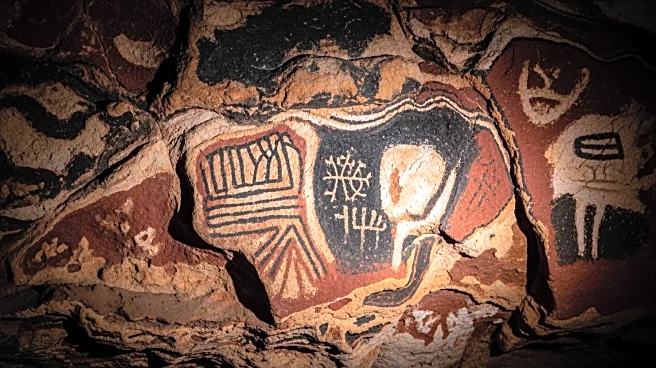
Researchers have discovered the oldest known cave art, a hand stencil, in a cave on the island of Sulawesi, Indonesia. This art, dating back at least 67,800 years, was found by a team of Indonesian and Australian archaeologists. The stencil was created
by blowing pigment over a hand placed against the cave wall, with some fingers altered to appear claw-like. This discovery provides new insights into the migration patterns of early humans from Asia to Australia, suggesting they may have traveled through the Indonesian islands. The art is significantly older than similar findings in Europe and offers evidence of a long-standing artistic culture in the region.
Why It's Important?
The discovery of this ancient cave art is crucial for understanding human migration and cultural development. It suggests that modern humans were present in Indonesia much earlier than previously thought, supporting theories that they traveled through these islands to reach Australia. This finding also highlights the rich cultural history of the region, indicating that early humans had complex symbolic relationships with their environment. The art's age challenges previous assumptions about the timeline of human artistic expression and migration, potentially reshaping historical narratives about human evolution and dispersal.
What's Next?
Further research is likely to focus on exploring other caves in the region to uncover more evidence of early human activity. Scientists may also investigate the cultural significance of the claw-like hand stencils to better understand the symbolic meanings behind these ancient artworks. This discovery could prompt a reevaluation of migration routes and timelines, influencing future archaeological studies and theories about human history.