

What's Happening?
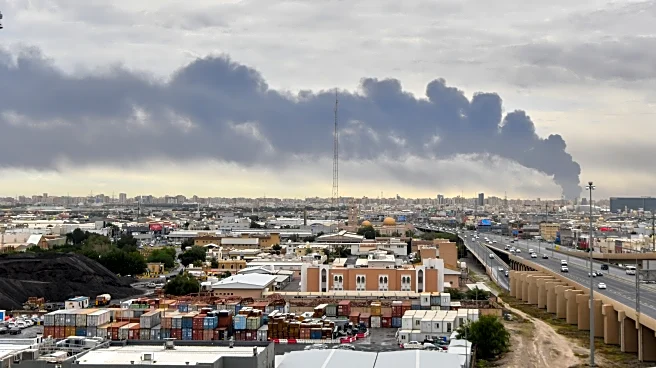
The International Energy Agency (IEA) has announced the release of a record 400 million barrels of oil from strategic stockpiles to address a global supply crunch and stabilize rising oil prices. This decision comes in response to the ongoing conflict
involving the United States and Iran, which has significantly disrupted oil supplies. The IEA is also in discussions with various governments about the possibility of releasing additional oil if necessary. Meanwhile, President Trump has temporarily lifted sanctions on Iranian oil, allowing the sale of 140 million barrels of oil currently held on tankers. This move is intended to alleviate the immediate supply issues and stabilize the market. Despite these efforts, oil prices remain volatile, with Brent crude and WTI experiencing significant fluctuations.
Why It's Important?
The release of oil from strategic reserves is a critical measure to mitigate the impact of the supply disruption caused by the conflict in the Middle East. The closure of the Strait of Hormuz by Iran has led to a significant reduction in global oil supply, surpassing the disruptions seen during the oil crises of the 1970s. This situation has resulted in soaring oil prices, which have far-reaching implications for the global economy. The IEA's actions aim to provide temporary relief to the markets, but the underlying geopolitical tensions continue to pose a threat to energy security. The temporary lifting of sanctions on Iranian oil by the Trump administration is a strategic move to ease the immediate supply constraints, but the long-term resolution of the conflict remains uncertain.
What's Next?
The IEA is actively consulting with member countries and other oil-producing nations, such as Canada and Mexico, to increase crude and oil product production. The agency is encouraging refineries to expedite their operations to boost supply. The ongoing negotiations between the United States and Iran, as indicated by President Trump, could potentially lead to a resolution of hostilities and the reopening of the Strait of Hormuz. However, Iran's denial of any dialogue with the U.S. adds uncertainty to the situation. The global energy markets will continue to monitor these developments closely, as any escalation or resolution could have significant implications for oil prices and global economic stability.