




What's Happening?
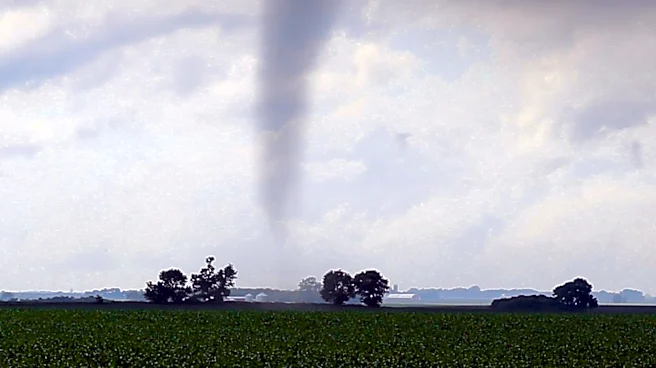
The National Weather Service has confirmed that three more tornadoes touched down in the Greater Cincinnati area during a major storm on August 11. This brings the total number of confirmed tornadoes from that storm to four. The newly confirmed tornadoes occurred
in Owensville, Ohio, at 3:47 p.m., Newtonsville, Ohio, at 3:49 p.m., and Fayetteville, Ohio, at 3:59 p.m. All three were classified as EF0 tornadoes. The Owensville tornado had maximum winds of 85 miles per hour, causing tree damage and minor structural damage. In Newtonsville, an EF0 tornado with 80 miles per hour winds removed a roof from a large barn and caused tree damage. The Fayetteville tornado, also an EF0 with 80 miles per hour winds, resulted in damage to a barn, single damage to a house, and tree damage along its path. Additionally, straight-line wind damage was confirmed in Mount Orab, Ohio, and Mowrystown, Ohio, both occurring around 4 p.m. on the same day.
Why It's Important?
The confirmation of additional tornadoes underscores the significant impact of severe weather events on communities in the Greater Cincinnati area. The classification of these tornadoes as EF0, while indicating lower intensity compared to stronger categories, still highlights the potential for property damage and disruption to daily life. Residents in these areas face the immediate challenges of recovery and repair, which can strain local resources and infrastructure. For homeowners and businesses, the damage necessitates insurance claims and potential rebuilding efforts, leading to financial burdens and operational interruptions. The repeated occurrence of such events also raises questions about long-term preparedness and resilience strategies for communities in tornado-prone regions. Understanding the frequency and intensity of these storms is crucial for local authorities to develop effective emergency response plans and for residents to adopt appropriate safety measures.
What's Next?
Following the confirmation of these tornadoes, local authorities and emergency services will likely continue their damage assessments and coordinate recovery efforts. Residents affected by the storms will be working to repair damaged properties and navigate insurance processes. The National Weather Service may continue to analyze weather patterns and provide updated forecasts and warnings to the public, emphasizing the importance of preparedness for future severe weather. Community leaders may also review existing disaster response protocols and consider enhancements to infrastructure resilience. Furthermore, public awareness campaigns about tornado safety and preparedness, including understanding warning signs and having emergency plans, could be reinforced to mitigate future risks. The long-term implications will involve ongoing monitoring of weather phenomena and potentially adapting building codes or land-use planning in vulnerable areas.
Beyond the Headlines
The increasing frequency or intensity of severe weather events, such as tornadoes, can have broader implications beyond immediate damage. It can contribute to discussions about climate change and its potential effects on local weather patterns, prompting conversations about environmental policies and sustainable development. The psychological impact on communities that repeatedly experience such destructive events can also be significant, leading to increased stress and anxiety among residents. Furthermore, the economic strain on local governments and insurance companies due to widespread damage can be substantial, potentially leading to higher premiums or reduced coverage options in high-risk areas. The need for robust community support systems, including mental health services and long-term recovery assistance, becomes paramount in the aftermath of such events, highlighting the interconnectedness of environmental, social, and economic factors.