








What's Happening?
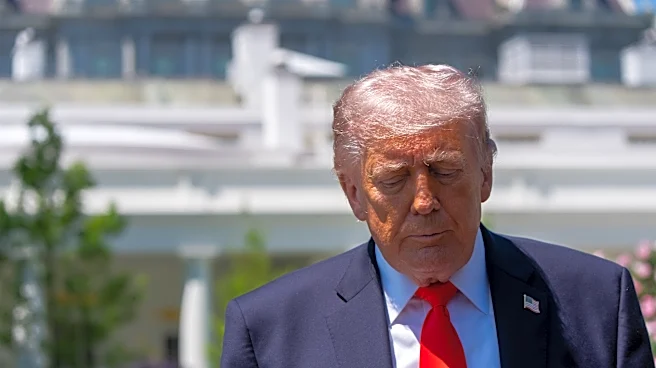
President Trump expressed dissatisfaction with Iran's latest proposal to end hostilities, stating that the Iranian leadership is disjointed and unable to agree on a unified approach. Speaking outside the White House, Trump noted that Iran's military capabilities
have been significantly diminished, and the country is eager to negotiate. However, he remains skeptical about the effectiveness of current negotiations, which are being conducted telephonically. Trump also mentioned his upcoming visit to China and dismissed concerns about U.S. missile stockpiles amid the ongoing conflict with Iran.
Why It's Important?
The ongoing negotiations with Iran are critical for U.S. foreign policy and regional stability in the Middle East. President Trump's dissatisfaction with the Iranian proposal highlights the complexities of reaching a diplomatic resolution. The disjointed nature of Iran's leadership could hinder progress, potentially prolonging tensions. The situation also impacts U.S. military strategy and resource allocation, as concerns about missile stockpiles and military readiness persist. The outcome of these negotiations could have significant implications for U.S. national security and its relationships with allies and adversaries in the region.
What's Next?
As negotiations continue, the U.S. will likely maintain pressure on Iran to reach a satisfactory agreement. President Trump's upcoming visit to China may also play a role in shaping diplomatic strategies, as China is a key player in global geopolitics. The administration will need to balance diplomatic efforts with military readiness, ensuring that U.S. interests are protected while seeking a peaceful resolution. The potential for further military action remains uncertain, as Trump has not disclosed specific plans regarding strikes on Iran.