
What's Happening?
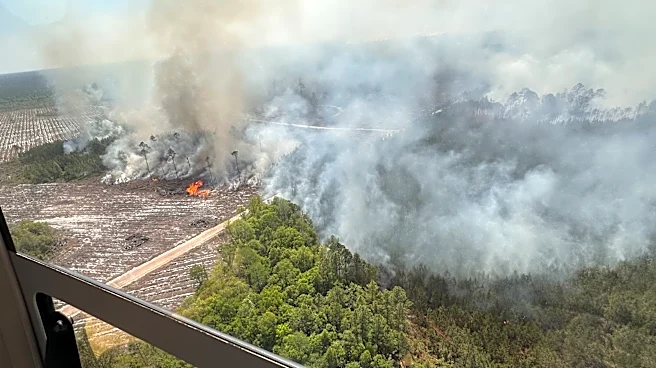
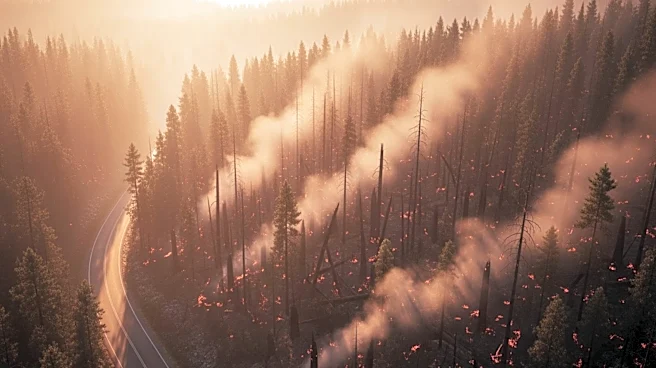
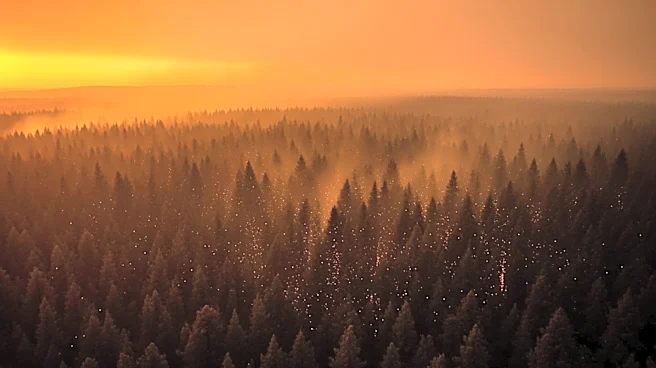
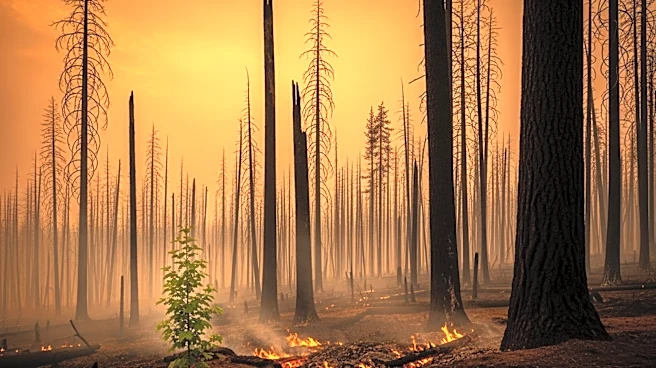
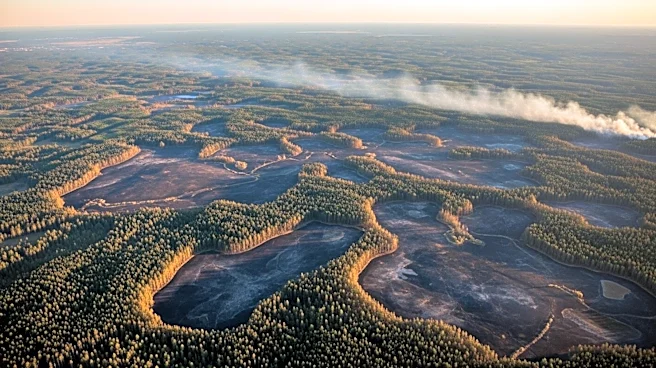
Satellite imagery from NASA has revealed the extensive damage caused by two major wildfires in southern Georgia. The Pineland Road Fire and the Highway 82 Fire have collectively burned over 50,000 acres
since their ignition earlier in April. These fires have affected forests, residential areas, and rural communities in Brantley and Clinch counties. The fires were exacerbated by extreme drought conditions, storm debris from Hurricane Helene, and persistent dry winds. The Georgia Forestry Commission identified human activities as the cause of these fires, with the Highway 82 Fire starting from welding sparks and the Pineland Road Fire from a Mylar balloon hitting power lines. As of late April, containment efforts were ongoing, with the Pineland Road Fire 23% contained and the Highway 82 Fire 32% contained.
Why It's Important?
The wildfires in Georgia represent a significant environmental and social challenge, marking one of the most destructive wildfire events in the state's history. Over 120 homes have been destroyed, the highest number ever recorded in Georgia due to wildfires. The fires have strained local resources and infrastructure, prompting emergency responses and aid from organizations like Direct Relief, which has provided financial and medical support to affected communities. The ongoing fires highlight the vulnerability of regions to climate-related disasters, exacerbated by human activities and environmental conditions. The situation underscores the need for improved fire management strategies and community preparedness to mitigate future risks.
What's Next?
Efforts to contain the fires continue, with hundreds of firefighters working on the ground and from the air to strengthen fire lines. Authorities have warned that conditions could worsen if dry weather persists or winds increase. Residents are advised to stay informed about local alerts and avoid active fire zones. The recovery process is expected to be lengthy, with ongoing support required for displaced residents and damaged infrastructure. The state may need to reassess its fire prevention and response strategies to better handle such large-scale incidents in the future.