

What's Happening?
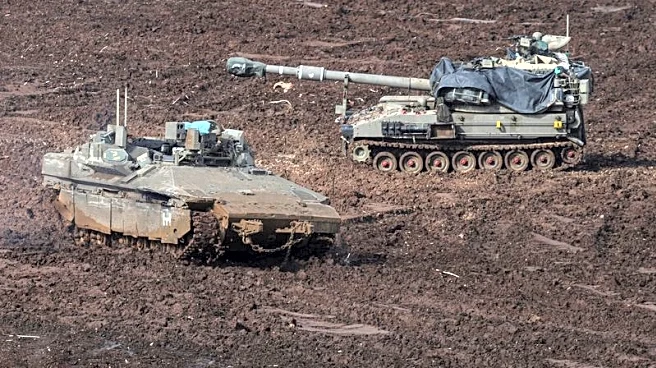
President Trump has announced plans to request $200 billion from Congress to fund ongoing military operations in Iran. This request comes despite claims that the conflict is nearing its conclusion. Trump emphasized the need for additional funding to ensure
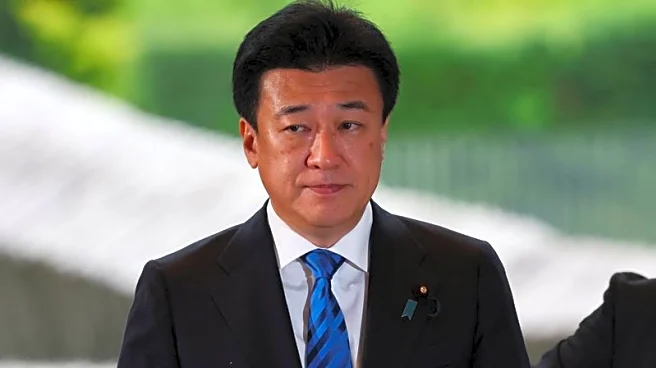
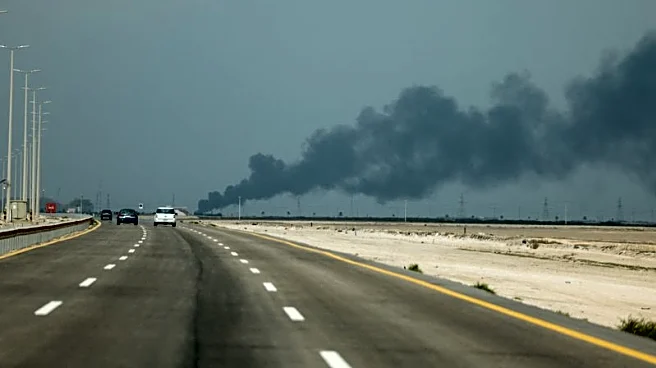
the military is well-equipped, citing the necessity for 'vast amounts of ammunition.' The Pentagon's request for this substantial funding was reported by the Washington Post, highlighting the administration's focus on maintaining military readiness. During a meeting with Japan's Prime Minister Sanae Takaichi, Trump expressed satisfaction with Japan's support, contrasting it with NATO countries' responses. The meeting also touched on Japan's potential role in reopening the Strait of Hormuz, a critical maritime passage affected by the conflict.
Why It's Important?
The request for $200 billion underscores the significant financial commitment the U.S. is making in the Middle East, raising questions about the long-term economic impact. This move could strain U.S. relations with allies, particularly if they perceive the U.S. as acting unilaterally. The financial burden of the war may also affect domestic priorities, as funds are diverted to military efforts. Additionally, the differing objectives between the U.S. and Israel in the conflict could lead to diplomatic tensions, complicating international relations. The situation in the Strait of Hormuz is critical, as it is a major route for global oil shipments, and any disruption could have widespread economic repercussions.
What's Next?
The next steps involve Congress's response to the funding request, which could face scrutiny given the substantial amount involved. The administration will likely continue diplomatic efforts to secure support from international allies, particularly in ensuring safe passage through the Strait of Hormuz. The outcome of these efforts will be crucial in determining the future of U.S. involvement in the region. Additionally, the U.S. may need to address internal and external criticisms regarding its military strategy and financial priorities.
Beyond the Headlines
The ongoing conflict and funding request highlight broader issues of military engagement and foreign policy under President Trump's administration. The emphasis on military readiness and unilateral action may reflect a shift in U.S. foreign policy priorities, potentially affecting global perceptions of American leadership. The financial implications of the war could also influence domestic policy debates, particularly regarding defense spending versus social programs. Furthermore, the situation raises ethical questions about the human cost of prolonged military engagements and the responsibilities of global powers in conflict resolution.