







What's Happening?
Gulf Cooperation Council (GCC) economies are experiencing their worst crisis since the pandemic due to the U.S.-Israel conflict with Iran, according to a Reuters poll. The conflict has disrupted the energy market, causing a historic supply shock and leading
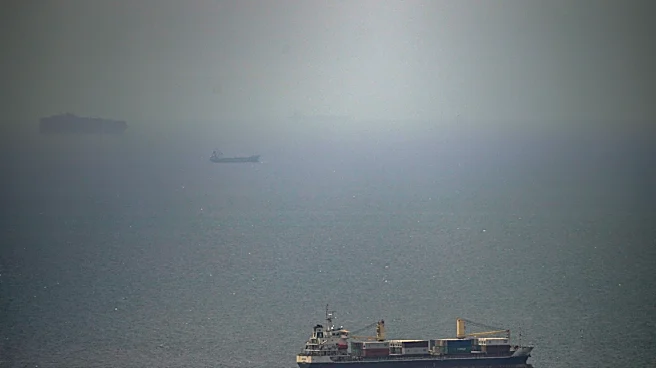
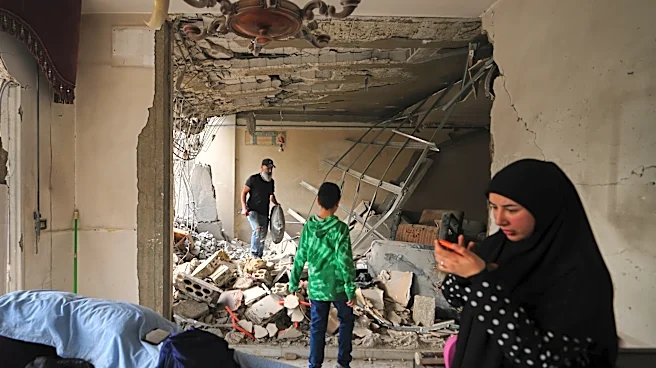
to sharply higher oil prices. Economists have revised growth forecasts for 2026, with some countries expected to contract. The near-total closure of the Strait of Hormuz and damage to refineries have severely impacted the region's economies. Despite high oil prices, Qatar, Kuwait, and Bahrain are expected to shrink, while the UAE's growth is stagnating. Saudi Arabia and Oman are faring slightly better but still face reduced growth forecasts.
Why It's Important?
The crisis in the Gulf economies highlights the region's vulnerability to geopolitical conflicts and its heavy reliance on energy exports. The disruption in the energy market has global implications, affecting oil prices and inflation worldwide. The situation underscores the need for diversification in the Gulf economies to reduce dependence on oil and gas. The conflict's impact on the region's economic stability could influence global energy policies and trade relations. The crisis also raises concerns about the long-term economic resilience of the GCC countries and their ability to recover from external shocks.
What's Next?
Economists expect a quick rebound in 2027, assuming the conflict ends soon. The International Monetary Fund anticipates a recovery in energy production and transport in the region. However, the prolonged delay in returning to full production capacity will have uneven impacts on GCC economies and public finances. The situation may prompt Gulf countries to accelerate efforts to diversify their economies and invest in non-oil sectors. The international community will likely monitor the conflict's developments and their implications for global energy markets.