

What's Happening?
In early December, a federal court held a summary judgment hearing in the case of NPR v. Trump, a lawsuit initiated in May by NPR and three Colorado-based public radio stations: Colorado Public Radio, Aspen Public Radio, and KSUT Public Radio. The plaintiffs
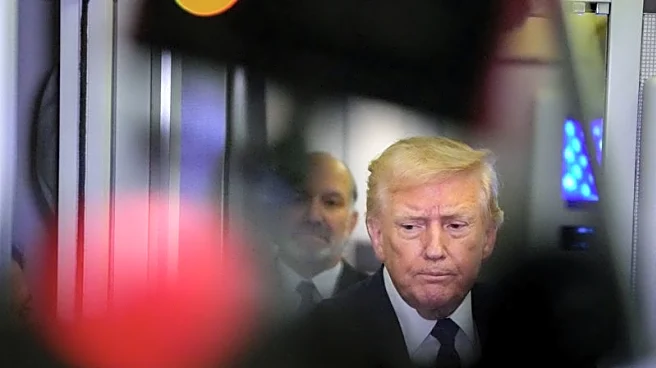
argue that President Trump's executive order issued on May 1 violated their First Amendment rights. The order allegedly imposed restrictions on public media funding based on viewpoint discrimination. During the hearing, attorneys for NPR contended that the executive order was an unprecedented attack on public media, while the U.S. Department of Justice defended the order as within the President's authority. Judge Randolph D. Moss presided over the hearing, posing technical questions to the plaintiffs about their standing and the potential ruling, while questioning the government on its justification for the order. The case draws parallels to historical instances where presidents have attempted to control public media, though the explicit nature of Trump's actions is noted as particularly bold.
Why It's Important?
This case is significant as it addresses the balance between executive power and First Amendment rights, particularly concerning public media. The outcome could set a precedent for how government funding and media independence are navigated in the U.S. If the court rules in favor of NPR, it could reinforce protections against government retaliation based on media content, potentially impacting how future administrations interact with public broadcasters. Conversely, a ruling in favor of the Trump administration might embolden future executive actions that could limit media freedom. The case also highlights ongoing tensions between the government and media institutions, reflecting broader societal debates about free speech and government oversight.
What's Next?
Judge Moss has not indicated whether he will issue a ruling from the bench, hold a trial, or dismiss the lawsuit. The decision will likely influence future legal interpretations of the First Amendment concerning public media funding. Stakeholders, including media organizations and civil rights groups, are closely monitoring the case, as its outcome could affect their operations and advocacy strategies. Depending on the ruling, there may be appeals, further legal challenges, or legislative responses aimed at clarifying the limits of executive power over media funding.
Beyond the Headlines
The case underscores the complex relationship between government and media, raising questions about the ethical implications of using funding as a tool for controlling media narratives. It also highlights the potential for legal frameworks to evolve in response to changing political dynamics. The explicit nature of the Trump administration's actions may prompt discussions about transparency and accountability in government-media interactions, influencing public perceptions of media independence and trust.