
What's Happening?
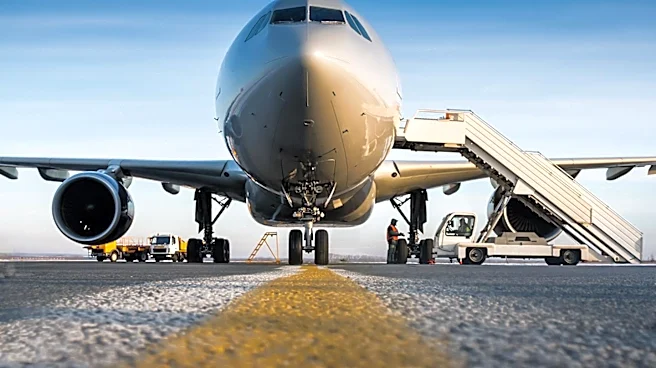
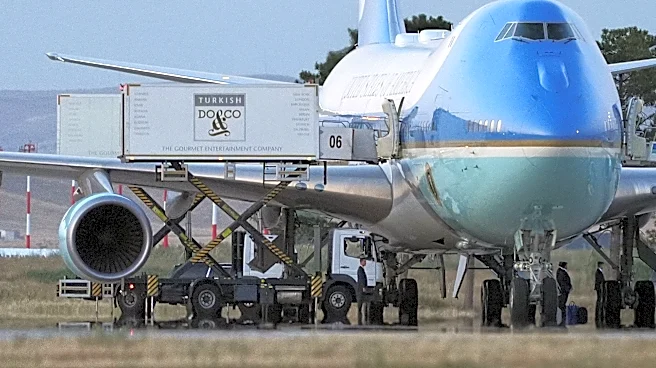
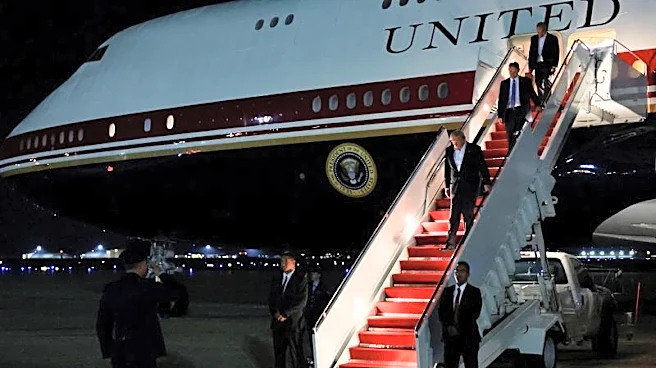
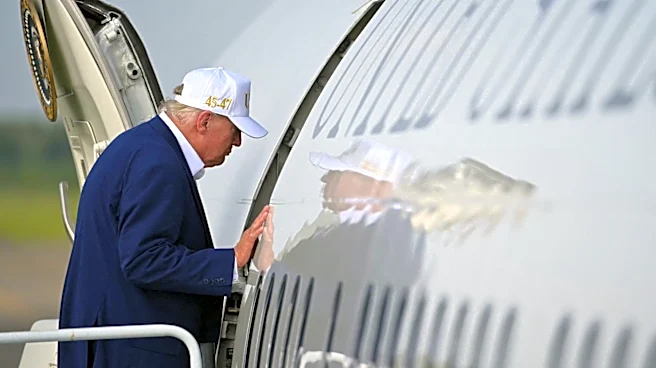
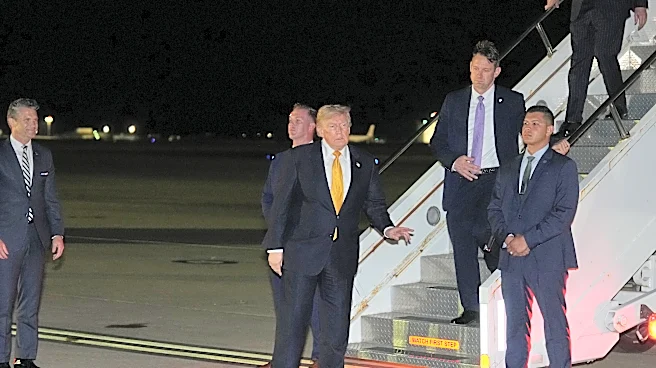
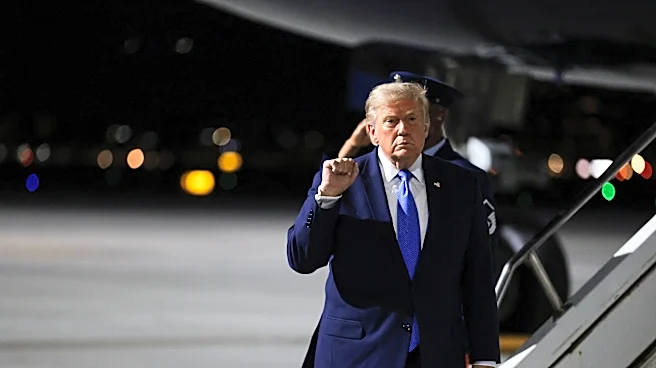
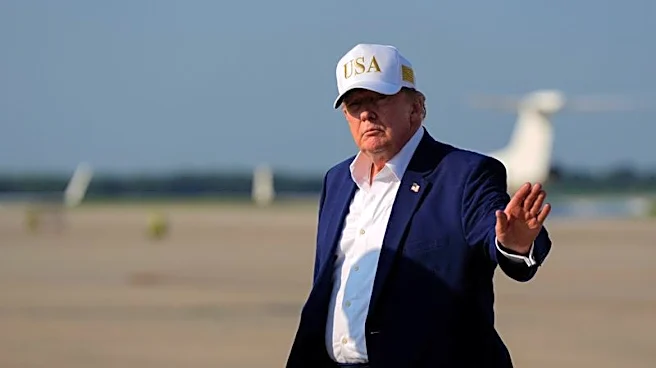
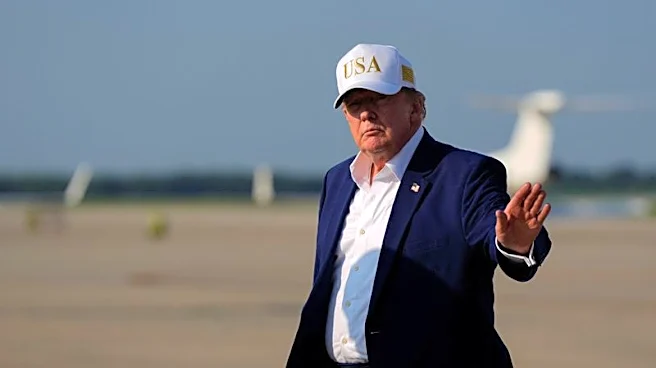
President Donald Trump revealed that he was covertly removed from Air Force One during a trip to Turkey last month due to a security threat. The Secret Service and military advised him to switch planes, leading to an unusual operation where Trump hid
in an airport catering container to board another aircraft while Air Force One acted as a decoy. This incident underscores the lengths to which presidential security measures can extend, although Trump downplayed the threat, stating he was not scared. The secrecy surrounding the event is unprecedented, as typically such operations are disclosed once the president is safe.
Why It's Important?
This incident highlights the complexities and risks involved in ensuring the safety of the U.S. President, especially during international trips. The use of decoy tactics and the secrecy maintained even after the event reflect the heightened security environment and the potential threats faced by high-profile political figures. The lack of transparency about the incident raises questions about the administration's communication practices and the potential implications for those involved in the operation, including White House staff and journalists. It also underscores the ongoing security challenges in international relations and the measures taken to protect national leaders.
What's Next?
The administration may face pressure to provide more details about the security threat and the decision-making process behind the covert operation. This could lead to discussions about the balance between security and transparency in presidential travel. Additionally, the incident may prompt a review of security protocols for future trips, potentially influencing how such operations are conducted and communicated to the public. The event also sets a precedent for how similar situations might be handled in the future, impacting the relationship between the presidency and the media.