
What's Happening?
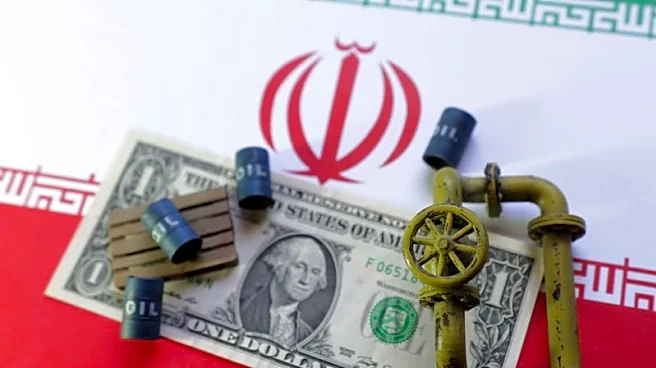
The global oil market is on edge due to potential unrest in Iran, which could significantly impact oil prices and supply. Iran, a major oil producer within OPEC, contributes approximately 4% of global oil demand,
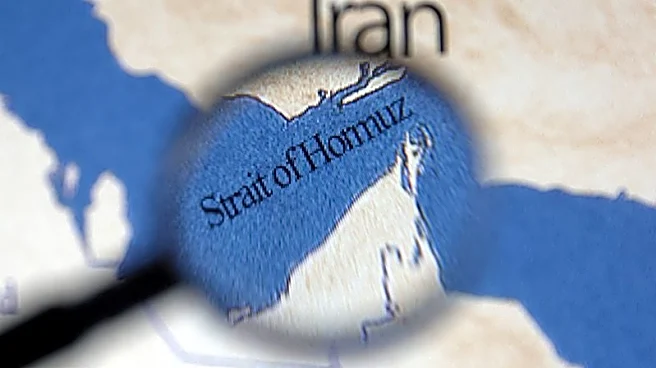
exporting around 2 million barrels daily. In contrast, Venezuela, another oil-rich nation, produces only about 1% of global demand. Experts highlight that any disruption in Iran's oil production could have a profound effect on global markets, unlike the relatively muted impact of Venezuela's oil industry challenges. The geopolitical tension in the Middle East, particularly involving Iran, is a critical factor, as the region holds a substantial portion of the world's oil reserves and production capacity. The possibility of conflict in the Gulf region, especially involving the Strait of Hormuz, a vital oil transit route, could lead to a dramatic increase in oil prices, potentially reaching $120 per barrel.
Why It's Important?
The situation in Iran is crucial for global oil markets due to its significant production capacity and strategic location. Any disruption in Iran's oil output could lead to a sharp increase in oil prices, affecting economies worldwide, including the U.S. Higher oil prices would increase costs for consumers and businesses, potentially slowing economic growth. Additionally, the geopolitical implications of unrest in Iran could destabilize the Middle East, further complicating international relations and energy security. The U.S. and other countries may need to tap into strategic petroleum reserves to stabilize markets, but this is a temporary solution. The potential for conflict in the Strait of Hormuz, through which a significant portion of the world's oil is transported, underscores the vulnerability of global energy supplies to regional instability.
What's Next?
If unrest in Iran escalates, the global oil market could face significant volatility. Other oil-producing nations might increase production to compensate for any shortfall, but this would take time. The International Energy Agency may release strategic reserves to mitigate immediate price spikes. However, the broader geopolitical implications could lead to prolonged instability in the region. Stakeholders, including governments and energy companies, will closely monitor the situation, preparing for potential disruptions. The U.S. may engage in diplomatic efforts to de-escalate tensions, while businesses and consumers brace for potential economic impacts.
Beyond the Headlines
The potential unrest in Iran highlights the broader issue of energy security and the global reliance on oil from politically unstable regions. It underscores the need for diversification of energy sources and investment in renewable energy to reduce dependency on oil. The situation also raises ethical questions about the impact of international sanctions on ordinary citizens in oil-producing countries, as these measures can exacerbate economic hardships and social unrest. Long-term, the global community may need to reassess its approach to energy policy and international relations to ensure stability and sustainability.