


What's Happening?
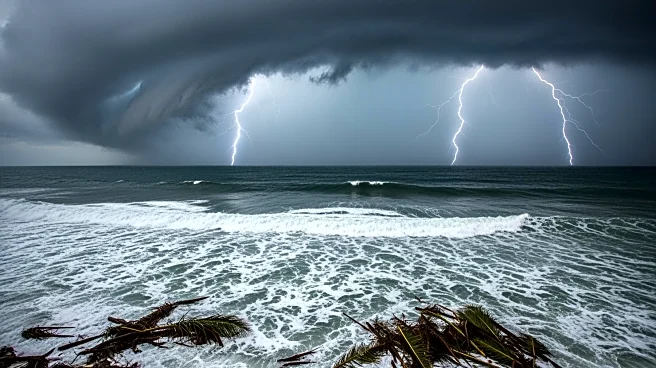
Hurricane Melissa, one of the most powerful Atlantic storms in over 150 years, has caused significant destruction across the Caribbean. The storm, which intensified rapidly from a tropical storm to a Category 5 hurricane, has resulted in at least 30 deaths,
with the full toll yet to be determined. Jamaica, Cuba, and the Bahamas have been particularly hard hit, with widespread flooding, wind damage, and storm surges. In Jamaica, Prime Minister Andrew Holness declared the country a disaster area, and significant efforts are underway to provide relief and recovery. The storm has also affected the Dominican Republic and Haiti, where additional fatalities have been reported.
Why It's Important?
The impact of Hurricane Melissa highlights the increasing frequency and intensity of extreme weather events, which are often linked to climate change. The devastation in the Caribbean underscores the vulnerability of island nations to such natural disasters, which can have long-lasting effects on their economies and infrastructure. The international response, including aid from the United States and other countries, is crucial for recovery efforts. This event also raises awareness about the need for improved disaster preparedness and climate resilience in vulnerable regions.
What's Next?
Recovery efforts are underway, with international aid being mobilized to support affected communities. The United States has authorized immediate assistance, deploying disaster response teams and coordinating with international organizations to provide essential supplies and support. The focus will be on restoring infrastructure, providing humanitarian aid, and rebuilding affected areas. The long-term recovery will require sustained international support and investment in climate resilience measures to mitigate future risks.