
What's Happening?
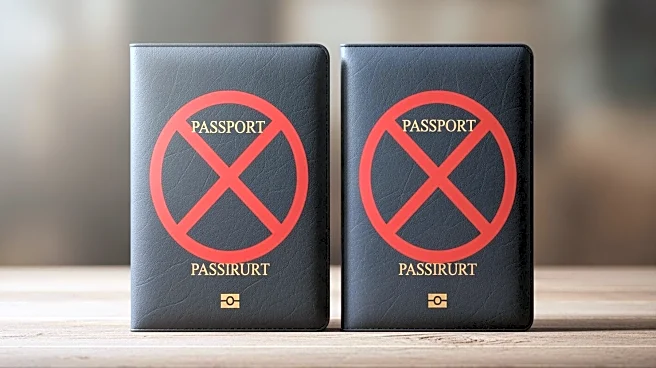
Mali and Burkina Faso have announced a travel ban on U.S. citizens in response to the Trump administration's recent expansion of travel restrictions. The White House had added these two West African countries,
along with five others, to a list of nations subject to a full travel ban, citing deficiencies in security screening and information-sharing. The ban is set to take effect on January 1. Mali and Burkina Faso's decision is based on the principle of reciprocity, as stated by their foreign ministries. This move follows similar actions by Niger, which also imposed a travel ban on U.S. citizens. The affected countries are governed by military juntas and have been strengthening ties with Russia amid strained relations with Western nations.
Why It's Important?
The reciprocal travel bans highlight the escalating diplomatic tensions between the U.S. and several African nations. These actions could impact diplomatic relations and economic interactions, particularly in terms of trade and security cooperation. The travel restrictions may also affect U.S. citizens living or working in these countries, as well as businesses that rely on cross-border operations. The situation underscores the broader geopolitical shifts as these African nations pivot towards alliances with non-Western powers, potentially altering regional power dynamics and affecting U.S. influence in West Africa.
What's Next?
The travel bans are likely to strain diplomatic relations further, potentially leading to more reciprocal actions or negotiations to resolve the tensions. The U.S. may need to engage in diplomatic discussions to address the concerns raised by Mali and Burkina Faso, possibly involving adjustments to the travel restrictions or increased cooperation on security issues. The situation may also prompt other countries affected by the U.S. travel ban to consider similar reciprocal measures, further complicating international relations.