







What's Happening?
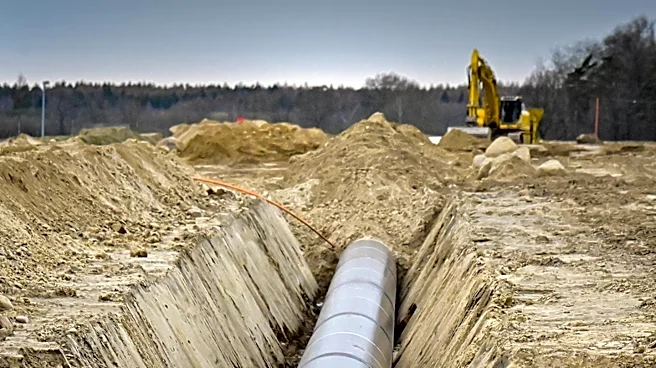
Wisconsin Governor Tony Evers announced $102 million in federal funding to replace approximately 15,028 lead service lines across 12 municipalities. This funding, made possible by the Bipartisan Infrastructure Law, will address both privately and publicly
owned lead pipes. U.S. Senator Tammy Baldwin (D-WI) played a crucial role in securing these federal funds. According to Governor Evers, over 86,000 private and public service lines have already been removed across the state with federal assistance. Milwaukee, the state's largest city, received the most significant portion of this funding, with $27.59 million allocated for private lead service lines in low-income areas and an additional $12.44 million for public lines. Racine received the second-highest amount at $19.36 million for public line replacement. The initiative aims to ensure access to safe and clean drinking water for Wisconsin residents, as no amount of lead is considered safe for children.
Why It's Important?
The replacement of lead pipes is a critical public health initiative with significant implications for communities across Wisconsin and potentially other states facing similar infrastructure challenges. Lead exposure, particularly in children, can lead to severe developmental and health issues. This federal investment directly addresses a long-standing environmental justice concern, as older infrastructure and lead pipes often disproportionately affect low-income communities. The funding not only improves public health outcomes but also stimulates local economies through infrastructure projects, creating jobs in construction and related sectors. Senator Baldwin's involvement highlights the importance of bipartisan efforts in securing federal resources for state-level infrastructure improvements, setting a precedent for how federal legislation can translate into tangible benefits for citizens.
What's Next?
The 12 municipalities that received funding will proceed with the replacement of lead service lines, with Milwaukee and Racine leading the efforts due to their substantial allocations. While this batch of funding addresses a significant number of pipes, other municipalities that applied but did not receive funds may seek future opportunities as the Evers administration has historically provided substantial funding for lead pipe replacement. The ongoing success of this program could encourage further federal and state investments in water infrastructure, potentially leading to more widespread lead pipe removal initiatives across the nation. Continued monitoring of water quality and public health outcomes in affected areas will be crucial to assess the long-term impact of these replacements.
Beyond the Headlines
This initiative extends beyond immediate public health benefits, touching upon broader themes of environmental equity and the role of government in safeguarding essential services. The focus on low-income census tracts in Milwaukee underscores a commitment to addressing historical disparities in infrastructure development and environmental protection. The Bipartisan Infrastructure Law, which provided these funds, represents a significant federal commitment to modernizing America's aging infrastructure, highlighting a shift towards proactive rather than reactive approaches to public works. This effort could also influence public perception and trust in government, demonstrating that legislative action can directly improve daily life and protect vulnerable populations. The long-term cultural impact could be a heightened awareness of water quality issues and a greater demand for resilient and safe public utilities.