






What's Happening?
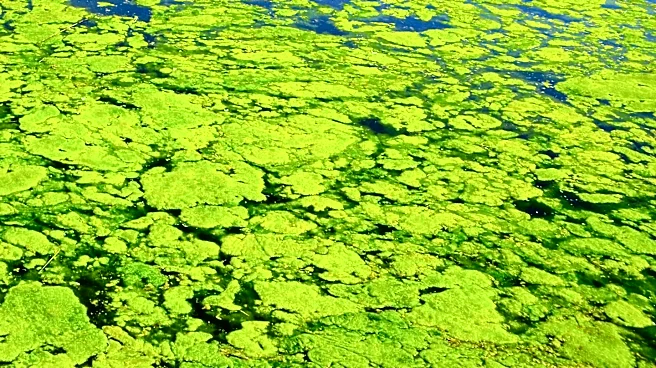
Residents in Greeley, Colorado, are experiencing issues with their tap water, which has developed a musty smell and metallic taste. This change in water quality is attributed to an algae bloom affecting a portion of the city's water source. Algae blooms
can occur when water bodies experience an overgrowth of algae, often due to high temperatures and nutrient pollution. These blooms can impact the taste and odor of drinking water, although they are not typically harmful to health. The city is working to address the issue and restore normal water quality.
Why It's Important?
Water quality issues like those in Greeley highlight the challenges municipalities face in maintaining safe and palatable drinking water. Algae blooms are becoming more common due to climate change and increased nutrient runoff, posing a threat to water supplies across the U.S. This situation underscores the need for investment in water treatment infrastructure and proactive measures to prevent nutrient pollution. Ensuring access to clean water is crucial for public health and community well-being, making it a priority for local governments and environmental agencies.
What's Next?
Greeley officials are likely to implement measures to mitigate the current algae bloom and prevent future occurrences. This may include enhancing water treatment processes and monitoring nutrient levels in water sources. Residents can expect updates from the city on the progress of these efforts. On a broader scale, similar water quality issues may prompt other municipalities to review their water management practices and invest in infrastructure improvements to safeguard against environmental changes.