





What's Happening?
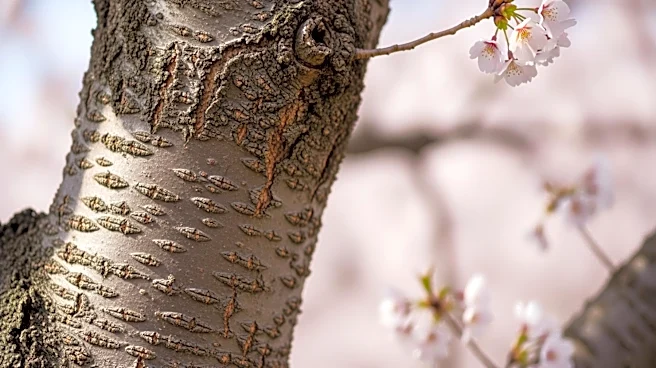
In Tokyo, the iconic Somei Yoshino cherry blossom trees, many of which were planted during Japan's postwar period in the 1960s, are showing signs of aging and frailty. Recently, two cherry blossom trees collapsed, one in Kinuta Park and another at the Chidorigafuchi
greenway, raising safety concerns. The tree in Kinuta Park, which was over 60 years old, damaged a fence, while the other nearly fell into the Imperial Palace moat. Last year, 85 trees fell in Tokyo parks, injuring three people, with many being cherry trees. The aging trees are affected by internal fungus growth and environmental factors like extreme heat and dry seasons. Tokyo officials have conducted health checks on cherry trees in major parks, but current measures are temporary, focusing on inspections and warning signs rather than replanting.
Why It's Important?
The collapse of these cherry blossom trees is significant as it highlights the challenges of maintaining urban green spaces amidst aging infrastructure. Cherry blossoms are a cultural symbol in Japan, attracting millions of visitors during the hanami season. The safety concerns could impact tourism and local enjoyment of these natural landmarks. Additionally, the situation underscores broader environmental issues, such as climate change, which may be exacerbating the trees' deterioration. The need for effective regeneration plans is crucial to preserve these cultural icons and ensure public safety.
What's Next?
Tokyo officials are likely to continue monitoring the health of cherry trees and may need to implement more permanent solutions, such as replanting younger trees. Public awareness campaigns could be initiated to educate visitors about safety precautions during hanami. The situation may prompt discussions on urban forestry management and the integration of climate resilience strategies in maintaining city parks. Stakeholders, including local governments and environmental groups, might collaborate to develop long-term conservation plans.
Beyond the Headlines
The aging cherry trees serve as a reminder of the broader impacts of climate change on natural and cultural heritage. As these trees are integral to Japan's identity, their decline could spark a cultural reflection on the balance between preserving tradition and adapting to environmental changes. The situation also raises ethical considerations about urban planning and the responsibility to maintain safe and sustainable public spaces.