





What's Happening?
A Haitian gang has released six children and seven women who were part of a group of over 50 people kidnapped following a deadly attack on Kenscoff, a community near Port-au-Prince. UNICEF confirmed the release, noting that among those freed were three
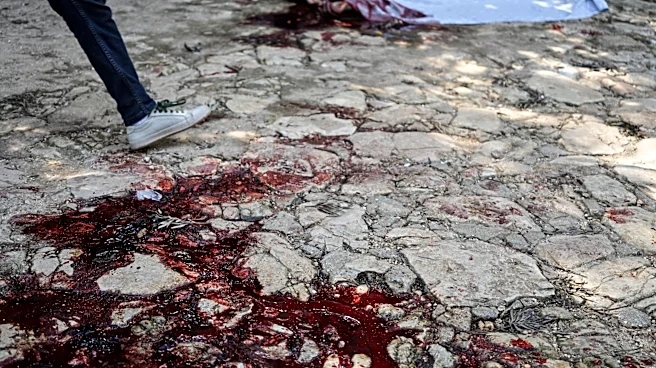
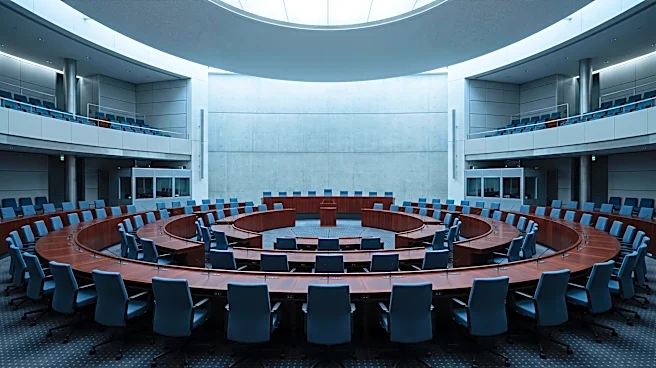
children under the age of two, a seven-year-old, and two teenage girls. The United Nations children’s agency collaborated with community leaders to secure their release. The mass abduction occurred after the gang killed at least 47 people during an attack on Kenscoff. A gang leader known as Izo 2 had threatened to execute all hostages if police engaged any gang members. This incident has sparked international outcry, with the U.N. Security Council holding an emergency meeting where diplomats, including those from the United States, Panama, and Colombia, expressed horror and called for the swift deployment of a U.N.-backed gang-fighting force.
Why It's Important?
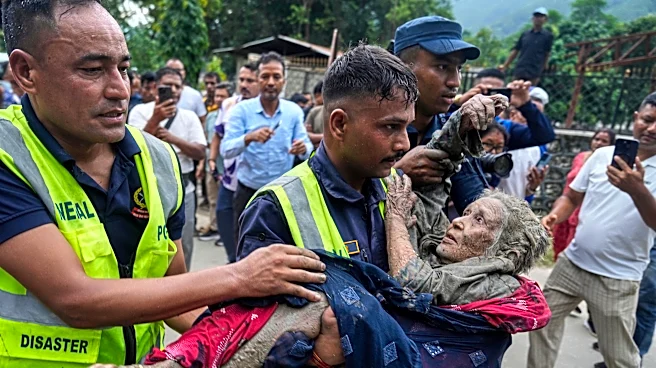
This event underscores the escalating humanitarian crisis and severe security challenges in Haiti, directly impacting the U.S. through migration and regional stability concerns. The mass kidnapping and subsequent release highlight the pervasive influence of gangs, which are not only terrorizing local populations but also disrupting governance and potentially influencing future elections. The U.S. Deputy Ambassador Jennifer Locetta emphasized the U.S.'s commitment to supporting Haitian-led security efforts to combat gang terror, urging U.N. members to provide resources for the gang suppression force. The instability in Haiti contributes to significant internal displacement, with nearly 1.5 million people, half of whom are children, forced from their homes. This situation also fuels migration pressures, as evidenced by the continued deportations to Haiti, including from the U.S., which further strains the country's already fragile resources and exacerbates humanitarian needs. The U.S. has a vested interest in stabilizing Haiti to prevent further regional destabilization and address the humanitarian consequences.
What's Next?
The immediate focus will be on the deployment of the U.N.-backed gang-fighting force and strengthening Haitian security forces in areas like Kenscoff and Port-au-Prince. U.N. members are being urged to provide necessary equipment and resources to facilitate this deployment. Concurrently, there is a call for investment in jobs, infrastructure, and other opportunities to offer alternatives to gang membership, addressing the root causes of violence. The U.N. Security Council's emergency meeting indicates a concerted international effort to address the crisis, but the effectiveness will depend on sustained commitment and coordination. The remaining hostages from the Kenscoff abduction are still a concern, and efforts to secure their release will likely continue. The broader challenge involves dismantling the power of gang coalitions that seek to prevent democratic processes and control key logistical nodes in the Caribbean drug economy, which could have long-term implications for regional security.
Beyond the Headlines
The crisis in Haiti reveals deeper implications regarding the intersection of criminal activity, political instability, and humanitarian catastrophe. The gangs' ability to control territory, roads, ports, and coastlines allows them to monetize logistics, including drug trafficking, making Haiti a critical node in the Caribbean drug economy. This situation is not merely a security issue but a complex web of economic, social, and political failures. The blurring lines between criminal operators, intermediaries, and intelligence assets suggest a sophisticated and entrenched problem. For external actors like Cuba, and potentially Moscow and Beijing, a crisis in Haiti could be leveraged to create pressure on Washington, highlighting the geopolitical dimensions of the instability. The long-term solution requires not only robust security interventions but also comprehensive development strategies that address poverty, lack of opportunity, and institutional weaknesses to build a resilient and democratic society, preventing Haiti from remaining a strategic pressure point in the Caribbean.