





What's Happening?
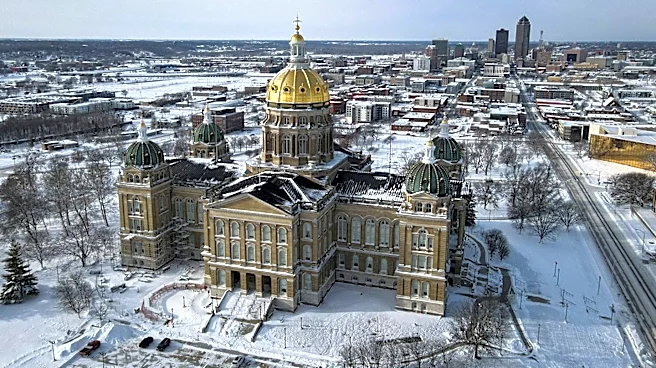
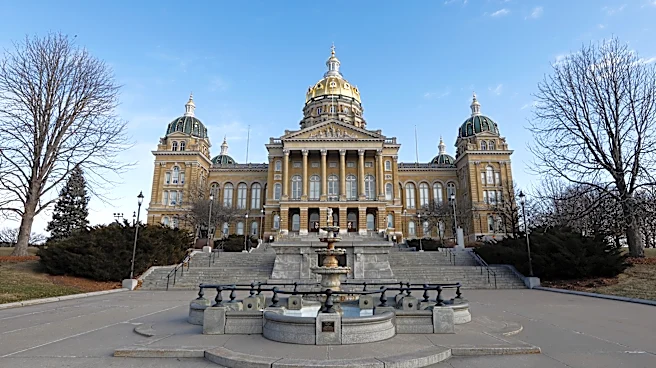
A federal judge in Iowa has ordered state officials to permit the Satanic Temple of Iowa to host a holiday event in the rotunda of the state Capitol. This ruling, issued on November 2, follows years of the state rejecting the organization's applications.
The Satanic Temple Iowa sued the state in August, alleging religious discrimination and violations of their constitutional rights and state law. Chief District Judge Stephanie M. Rose stated that the Satanic Temple is likely to succeed on its free-speech claim. The court has mandated the director of the Iowa Department of Administrative Services to approve the group's application within seven days. Iowa's Republican leaders had previously barred the group's observances, citing policies against gratuitous violence and obscene displays, and expressing concerns about children being present. The Satanic Temple, founded in 2013, identifies as a non-theistic religious organization advocating for secularism and does not believe in Satan. Their proposed event includes Krampus costumes, caroling, coloring for children, and ornament making.
Why It's Important?
This judicial order underscores the ongoing legal battles concerning religious freedom and free speech in public spaces, particularly when it involves non-traditional religious groups. The ruling reinforces the principle that government entities cannot discriminate against religious organizations based on the content of their beliefs, even if those beliefs are unpopular or perceived as controversial. For the Satanic Temple, this decision is a significant victory, affirming their right to equal access to public forums alongside other religious displays, such as Christmas trees. Conversely, Iowa state officials, who intend to appeal the decision, face a challenge in balancing public order concerns with constitutional protections for religious expression. The case highlights the complexities of applying First Amendment rights in diverse religious landscapes and sets a precedent for how states must navigate requests from various religious groups for public displays.
What's Next?
Iowa state officials, led by Attorney General Brenna Bird's office, have indicated their intent to appeal the federal judge's decision. This means the legal battle over the Satanic Temple's right to hold a holiday event in the state Capitol is likely to continue. In the immediate future, the Iowa Department of Administrative Services is required to approve the group's application within seven days, as per the court order. This could lead to the event proceeding as planned for the upcoming holiday season, unless an emergency stay is granted on appeal. The appeal process will further scrutinize the state's arguments regarding public safety and decorum versus the Satanic Temple's claims of religious discrimination and free speech violations. The outcome of the appeal could establish broader legal interpretations for similar cases across the U.S., influencing how other states handle requests from diverse religious organizations for public displays.
Beyond the Headlines
The case extends beyond a simple dispute over a holiday event, touching upon deeper societal questions about religious pluralism, secularism, and the interpretation of the First Amendment. The Satanic Temple often uses its public displays to advocate for secularism and challenge what it perceives as religious favoritism by the state. Their presence in public spaces, particularly alongside traditional religious symbols, forces a re-evaluation of what constitutes 'religion' in the public square and the extent to which government can regulate religious expression. The state's concerns about 'gratuitous violence' or 'obscene displays' in relation to Krampus costumes also raise questions about subjective interpretations of appropriateness and potential viewpoint discrimination. This legal challenge could contribute to a broader discourse on the separation of church and state, prompting public institutions to develop more inclusive and constitutionally sound policies for managing diverse religious expressions in public forums.