



What's Happening?
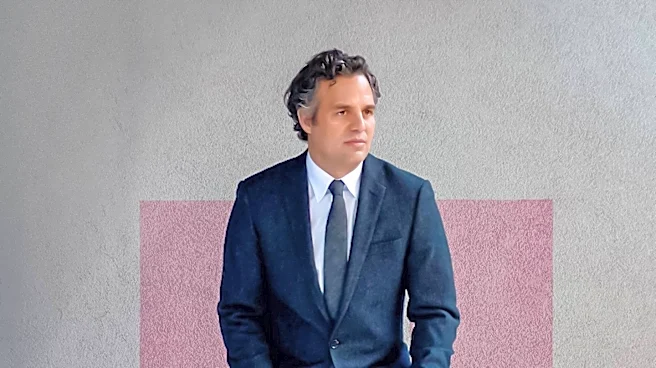
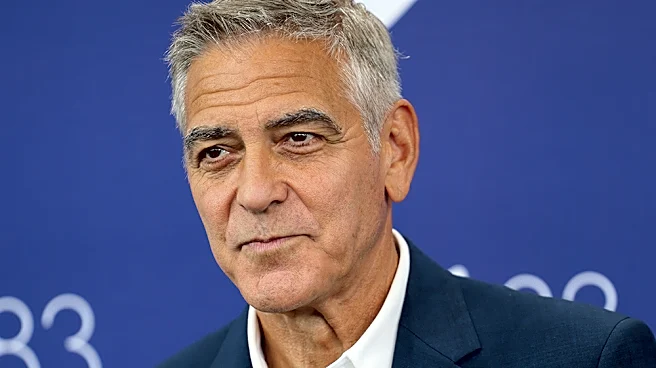
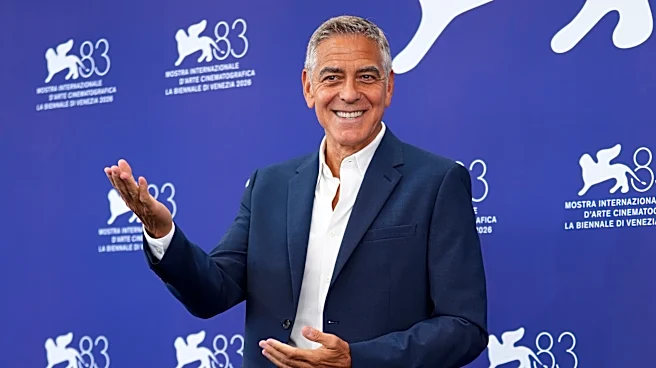
Hollywood actor George Clooney has publicly defended fellow actor Mark Ruffalo's right to free speech, following Ruffalo's controversial comments regarding the merger of Paramount and Warner Bros. and Oracle's technology assistance to Israel. Ruffalo had
shared a video of Oracle executive vice chair Safra Catz discussing the company's 'profoundly scary technology' made available to the Israeli military, subsequently accusing Israel of genocide and linking Oracle's role to an 'apartheid system of oppression.' Clooney stated, 'I support Mark Ruffalo’s ability to speak freely. It’s ridiculous. We’re not going to ban speech. I believe in free speech even when I completely disagree with it. That’s important. In fact, it’s part of how democracy works.' This defense has drawn criticism from conservatives, including actor James Woods, who highlighted what they perceive as a double standard, noting Clooney's silence when conservative voices faced repercussions for their political views.
Why It's Important?
This incident underscores the ongoing tension between free speech, corporate interests, and political discourse within the entertainment industry and broader U.S. society. The debate highlights how public figures' statements on sensitive geopolitical issues, particularly the Israeli-Palestinian conflict, can quickly become polarizing. For Hollywood, it reveals a divide where some advocate for unrestricted expression, while others accuse them of selective application of free speech principles, especially when it concerns conservative viewpoints. The involvement of a major tech company like Oracle and its executive in the controversy also brings to light the increasing scrutiny on corporate involvement in international conflicts and the ethical implications of technology deployment. The backlash against Ruffalo and the subsequent defense by Clooney illustrate the challenges public figures face in navigating complex political landscapes while maintaining their professional standing and public image.
What's Next?
The controversy is likely to continue generating discussion within Hollywood and among political commentators. More public figures may weigh in, either in support of Ruffalo's right to speak or in condemnation of his specific remarks. The 'Brigade,' a Hollywood group comprising nearly 1,000 members, friends, and allies of the Jewish community, has already accused Ruffalo of antisemitism, suggesting further organized responses could emerge. Conversely, the letter signed by over 180 Jewish figures backing Ruffalo indicates a growing counter-movement. This ongoing debate could influence future corporate decisions regarding mergers and acquisitions, particularly those involving media conglomerates, as the ethical implications of such deals and the political leanings of their stakeholders come under increased scrutiny. The broader conversation about free speech and its limits in the context of alleged antisemitism will also likely persist.
Beyond the Headlines
This event delves into the deeper societal implications of 'cancel culture' and the perceived weaponization of accusations like antisemitism to silence dissenting voices. The criticism leveled at Clooney for his 'sudden, newfound love for the First Amendment' by conservatives suggests a broader concern about ideological hypocrisy and the selective application of principles based on political alignment. It highlights the ethical dilemma faced by public figures: whether to speak out on controversial issues and risk professional backlash, or remain silent and potentially be seen as complicit. The incident also touches upon the evolving role of social media as a platform for both activism and condemnation, where statements can quickly go viral and elicit widespread reactions. Ultimately, it reflects a fragmented public sphere where interpretations of fundamental rights like free speech are increasingly polarized, and the boundaries of acceptable discourse are constantly being negotiated.