





What's Happening?
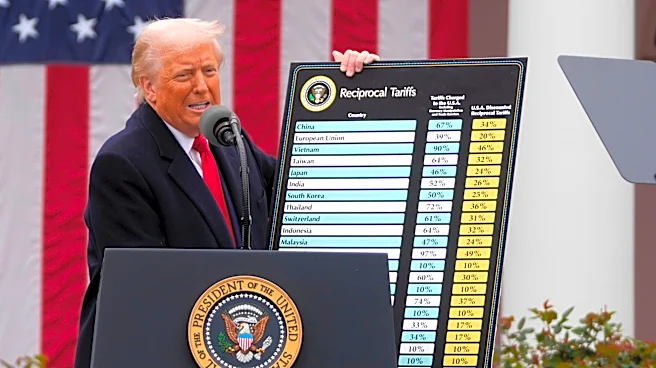
A coalition of 25 U.S. states has filed a lawsuit against the Trump administration, challenging the legality of newly imposed tariffs ranging from 10% to 12.5% on goods from 60 trading partners, including India. These tariffs are said to be an attempt
to replace earlier import taxes that were struck down by the U.S. Supreme Court in February. The lawsuit seeks to block the tariffs, have them declared unlawful, and secure refunds for duties already collected. The Trump administration justifies the tariffs by arguing that the affected countries have not done enough to prevent imports made with forced labor. The states involved in the lawsuit include New York, California, and Illinois, among others.
Why It's Important?
The lawsuit represents a significant challenge to the Trump administration's trade policy, which has been characterized by a shift towards higher tariffs and protectionism. If successful, the lawsuit could lead to a rollback of these tariffs, impacting U.S. trade relations and potentially lowering costs for American consumers and businesses. The case also highlights the ongoing tension between state governments and federal trade policy, particularly in how trade measures are implemented and justified. The outcome could set a precedent for how future trade policies are contested and enforced.
What's Next?
The lawsuit will proceed in the Court of International Trade, where the states will argue that the tariffs exceed presidential authority and are not justified under the current legal framework. The Trump administration is expected to defend its position by emphasizing the need to address forced labor in international trade. The court's decision could have far-reaching implications for U.S. trade policy and the balance of power between state and federal governments in trade matters.