



What's Happening?
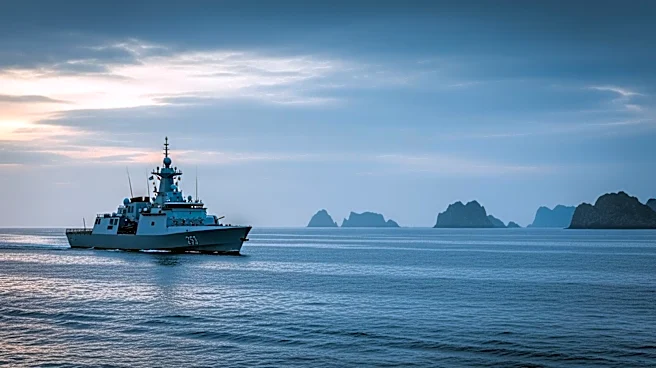
U.S. forces have been actively responding to a series of attacks by the Islamic Revolutionary Guard Corps (IRGC) in the Strait of Hormuz. The conflict began when the IRGC attempted to prevent ships from passing through the waterway, leading to a series of retaliatory
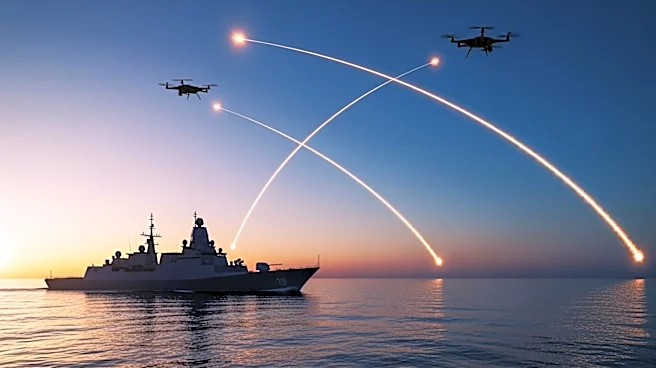
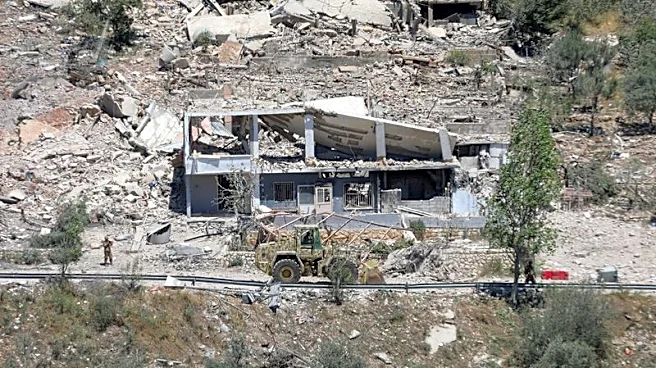
strikes by the U.S. Central Command (CENTCOM). On June 6, CENTCOM reported shooting down four attack drones and destroying a communications tower on Qeshm Island. In retaliation, Iran launched missile and drone attacks on Bahrain and Kuwait, with CENTCOM intercepting six out of seven missiles. The U.S. Navy has also been intercepting ships attempting to bypass sanctions, including the Curacao false-flagged VLCC Davina. The situation remains tense as both sides continue to engage in strategic maneuvers.
Why It's Important?
The Strait of Hormuz is a critical chokepoint for global oil transportation, and any disruption can have significant implications for international energy markets. The ongoing conflict between U.S. forces and the IRGC highlights the geopolitical tensions in the region, which could escalate into broader military confrontations. The U.S. Navy's actions to intercept sanctioned ships underscore the enforcement of international sanctions against Iran, impacting global trade and diplomatic relations. The situation also reflects the strategic importance of maintaining open and secure shipping lanes, which are vital for global economic stability.
What's Next?
The U.S. is likely to continue its surveillance and defensive operations in the Strait of Hormuz to ensure the safety of commercial shipping. Further diplomatic efforts may be necessary to de-escalate tensions and prevent further military engagements. The international community, particularly countries reliant on oil imports through the strait, may increase pressure on both the U.S. and Iran to find a peaceful resolution. Additionally, the U.S. may seek to strengthen alliances with regional partners to enhance security and stability in the Gulf region.