




What's Happening?
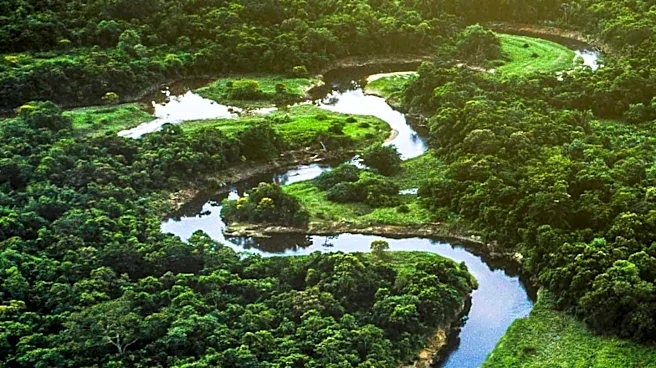
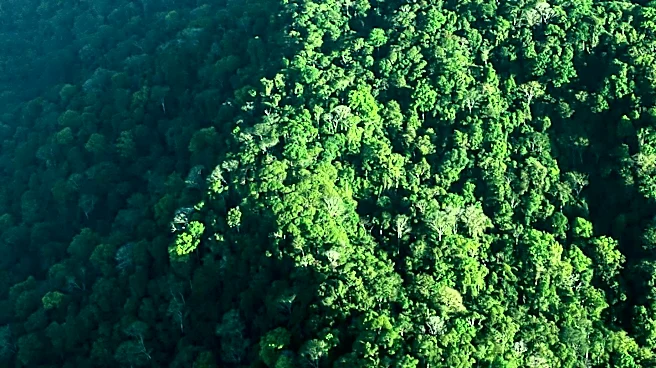
The Amazon rainforest is experiencing an acceleration of climate extremes, with central northern Amazonia identified as a hotspot for increasing extreme heat and moisture deficit. This trend elevates the risk of drought, wildfire, and ecosystem stress
across the region. A new study, conducted by an international team of over 50 scientists including experts from the Science Panel for the Amazon and led by researchers at Lancaster University in partnership with WWF UK, challenges previous assumptions about the climate resilience of certain Amazonian areas. The research indicates that regions once considered less vulnerable are now showing some of the sharpest increases in extreme heat and water stress. While the Southern Amazon remains the fastest-warming area, the emergence of central northern Amazonia as a new hotspot is particularly concerning due to its extensive intact forest cover, natural savannas, and Indigenous territories, which were previously thought to be among the strongest natural defenses against climate change. The study highlights that these rapid changes cannot be solely attributed to local factors like deforestation but are also driven by global climate change and worldwide greenhouse gas emissions.
Why It's Important?
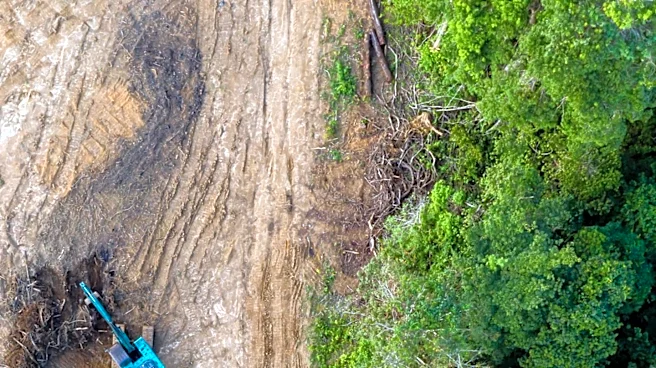
The accelerating climate extremes in the Amazon have profound implications, not only for the rainforest itself but also globally. Widespread forest dieback and degradation would release vast amounts of stored carbon, significantly exacerbating global climate change and altering regional climates worldwide. The increased risk of drought and wildfire poses an immediate threat to the Amazon's biodiversity and the communities that depend on it. The findings underscore the urgency of global action to reduce greenhouse gas emissions and prevent further deforestation and degradation. The study also points to the need for increased investment in climate adaptation measures, such as fire prevention and support for local populations affected by changing river levels. The potential for the Amazon to cross critical tipping points, where large-scale transformation to a degraded state becomes irreversible, has global consequences for climate stability, biodiversity, and the well-being of human populations, including those far beyond the Amazon basin.
What's Next?
To mitigate the escalating threats to the Amazon, urgent measures are required. These include preventing fires, rapidly reducing global greenhouse gas emissions, halting further deforestation and degradation, and increasing investment in climate adaptation strategies. The findings strengthen the case for immediate action on fire prevention and tackling deforestation. Mechanisms like the Tropical Forest Forever Facility (TFFF) are being considered to fund adaptation and conservation efforts in tropical forests facing intensifying climate extremes. The UK Government's commitment to the TFFF is seen as timely, but it needs to be supported by measures to remove deforesting commodities from the UK's supply chains. Continued monitoring and research, such as expanding the study of atmospheric processes on isotopes beyond Manaus, will be crucial for better understanding the origins of water vapor and for developing early warning indicators for prolonged droughts, especially in the context of ongoing climate change.
Beyond the Headlines
The study's revelation that climate extremes are accelerating in some of the Amazon's most intact forests, far from the traditional 'arc of deforestation,' highlights a deeper, less obvious implication: the Amazon is being significantly affected by global climate change, driven by worldwide emissions, rather than solely by local land-use changes. This underscores the ethical dimension of climate justice, as the impacts of global emissions are disproportionately affecting vulnerable ecosystems and local livelihoods in the Amazon. The observed changes, such as mass deaths of river dolphins and alterations in bird populations, point to a broader ecological disruption. The reliance of local communities on the forest for products like açaí means that climate events threaten food security and weaken the forest's role in a growing socio-bioeconomy, potentially derailing public policies aimed at positive transformation in the region. This situation calls for a re-evaluation of global responsibilities and a concerted international effort to protect this vital ecosystem.