
What's Happening?
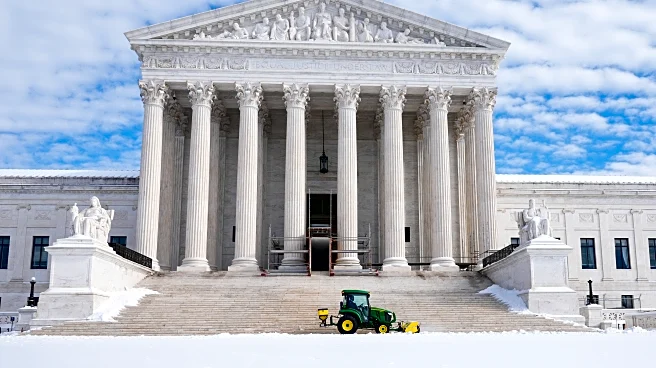
The U.S. Supreme Court is currently deliberating a case that could significantly expand presidential powers, specifically regarding the ability to dismiss a Federal Trade Commission (FTC) commissioner.
This case, discussed in a recent hearing, involves the president's authority to remove commissioners from independent regulatory agencies, a decision that could redefine executive power boundaries. Amy Howe, co-founder of SCOTUS blog, provided insights into the implications of this case during an interview with NPR's A Martinez.
Why It's Important?
The outcome of this Supreme Court case could have profound implications for the separation of powers in the U.S. government. Expanding presidential authority to dismiss FTC commissioners could set a precedent affecting other independent agencies, potentially increasing executive influence over regulatory bodies. This shift could alter how these agencies operate, impacting their independence and the checks and balances system. Stakeholders, including legal experts and policymakers, are closely monitoring the case, as its decision could reshape the landscape of federal regulatory oversight.
What's Next?
The Supreme Court's decision will be pivotal in determining the future scope of presidential powers. If the court rules in favor of expanding these powers, it could lead to legislative responses aimed at redefining or limiting executive authority. Political leaders and advocacy groups may also react, potentially challenging or supporting the decision based on its alignment with their interests. The ruling could influence future appointments and dismissals within federal agencies, affecting their operational autonomy and policy directions.