


What's Happening?
The National Weather Service's Space Weather Prediction Center has issued a G3 (strong) geomagnetic storm watch for June 4-5, due to recent solar activity. This storm increases the likelihood of aurora borealis visibility in areas further from the poles,
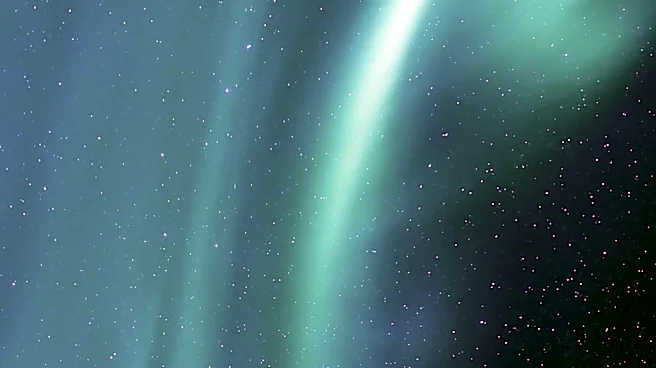
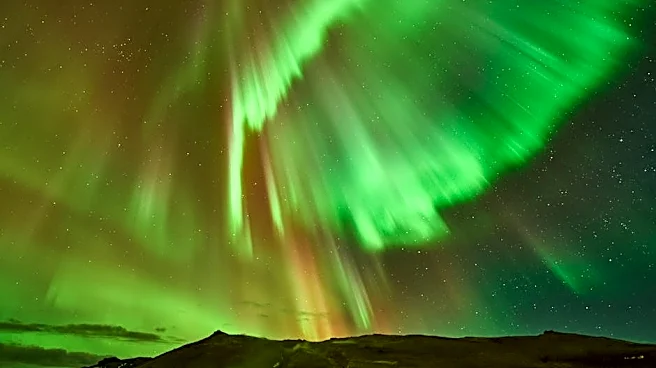
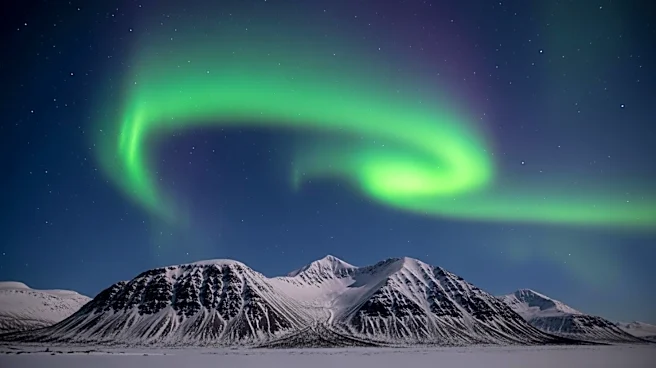
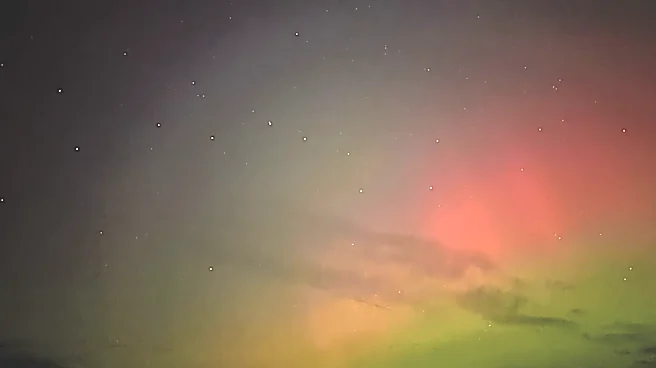
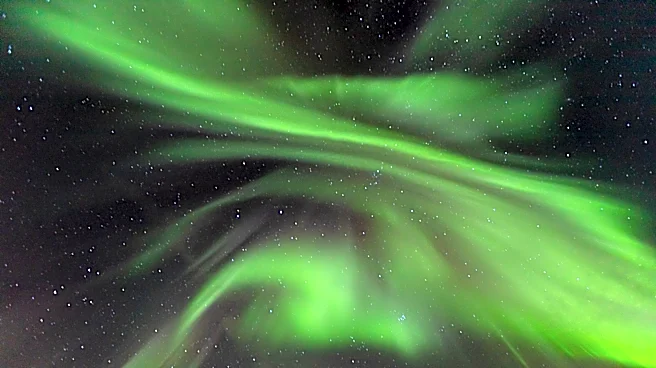
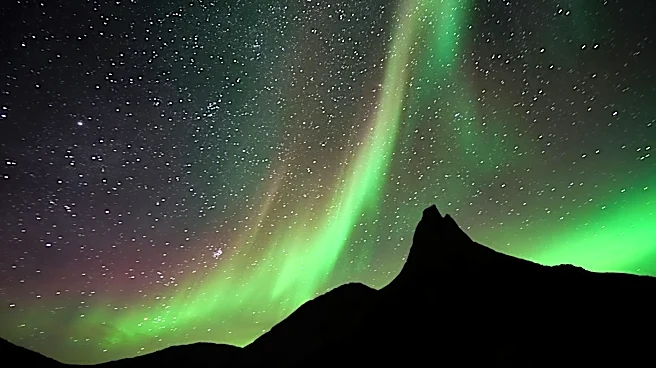
including Utah. The aurora borealis, or northern lights, occurs when solar material from the sun interacts with Earth's magnetic fields, creating a colorful sky display. The current watch follows a previous G4 (severe) alert that allowed Utah residents to witness the northern lights in November. The University of Alaska-Fairbanks' Geophysical Institute suggests high aurora activity may persist past sunset. The northern lights may be visible in northern Utah and possibly across the rest of the state, with similar visibility expected in Idaho, Wyoming, Washington, and Montana.
Why It's Important?
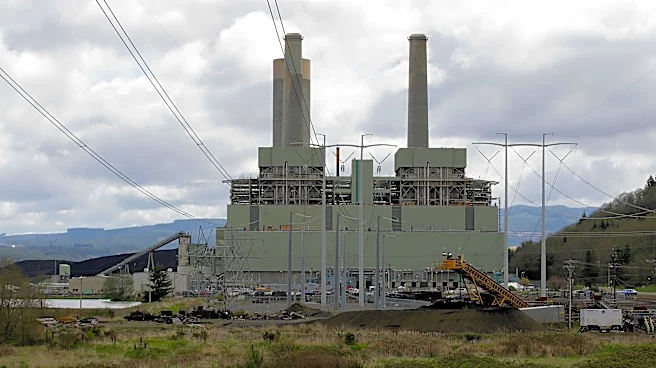
The geomagnetic storm watch is significant as it highlights the impact of solar activity on Earth's magnetic field, potentially affecting power systems and communication networks. The visibility of the northern lights in regions like Utah, which are typically too far south to experience such phenomena, underscores the intensity of the solar storm. This event provides a unique opportunity for residents in these areas to witness a natural spectacle, while also serving as a reminder of the broader implications of solar activity on technological infrastructure. The increased frequency of such storms may prompt further research and preparedness measures to mitigate potential disruptions.
What's Next?
As the geomagnetic storm progresses, residents in affected areas are advised to prepare for possible disruptions in power and communication systems. The Space Weather Prediction Center will continue to monitor solar activity and provide updates on the storm's intensity and potential impacts. Observers in Utah and surrounding states are encouraged to watch for the northern lights, particularly in areas with clear skies. The Geophysical Institute projects lower aurora activity levels by Friday evening, but the possibility of visibility remains. This event may also lead to increased interest in space weather phenomena and their effects on Earth.