
What's Happening?
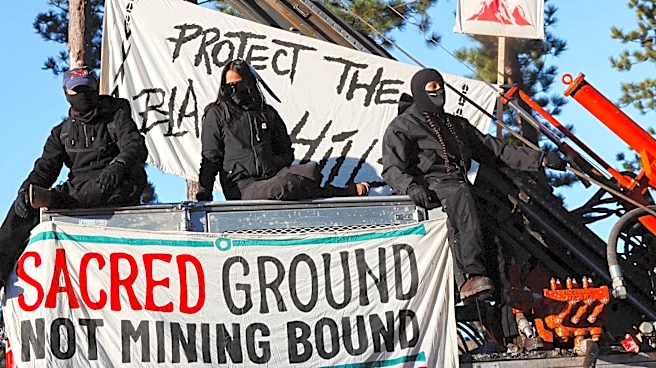
Nine Sioux tribes have filed a federal lawsuit against the U.S. Forest Service and the U.S. Department of Agriculture, challenging the approval of exploratory drilling near Pe’sla, a sacred site in the Black
Hills. The tribes allege that federal agencies violated legal obligations and bypassed a two-mile buffer agreement meant to protect Pe’sla. The lawsuit claims that the Forest Service improperly used a categorical exclusion to approve the project, which involves significant ground disturbance. The tribes, who purchased the land to protect it, argue that the mining operations were approved without their consultation or consent, violating existing agreements.
Why It's Important?
The lawsuit highlights ongoing tensions between federal agencies and Native American tribes over land rights and resource management. Pe’sla is a site of cultural and spiritual significance for the Sioux tribes, and the case underscores the broader struggle for indigenous land rights and sovereignty. The outcome of this lawsuit could set a precedent for how federal agencies engage with tribes on land use issues, potentially influencing future policies and practices. It also raises questions about the balance between economic development and the preservation of culturally significant sites, a debate that resonates across the U.S.
What's Next?
The lawsuit could lead to a suspension of the drilling operations pending further consultation with the tribes. If successful, it may compel federal agencies to adhere more strictly to consultation requirements and buffer agreements in future projects. The case could also galvanize support for stronger legal protections for indigenous lands and cultural sites. As the legal process unfolds, it may attract national attention, potentially influencing public opinion and policy discussions on indigenous rights and environmental conservation.
Beyond the Headlines
This case reflects broader issues of indigenous sovereignty and the historical marginalization of Native American tribes in land management decisions. It highlights the need for more inclusive and respectful engagement with indigenous communities in federal decision-making processes. The situation also underscores the importance of preserving cultural heritage and the challenges of balancing economic interests with environmental and cultural preservation. The outcome of this lawsuit could have long-term implications for how indigenous rights are recognized and protected in the U.S.