
What's Happening?
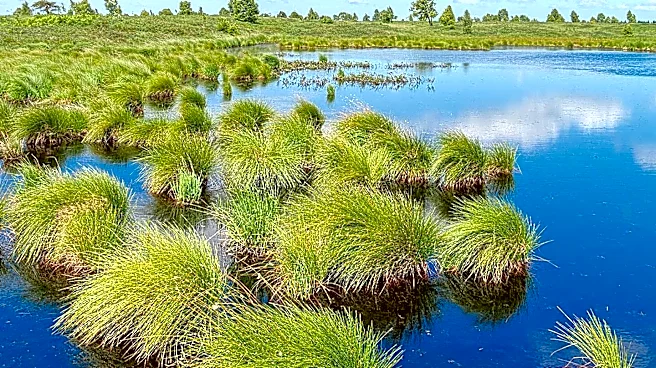
In North Carolina's Inner Banks, a significant effort is underway to restore 23 square miles of critical peatland. Decades of drainage for abandoned farming ventures have left the peatlands vulnerable
to drought and wildfires, altering native habitats and releasing 130,000 tons of climate-warming carbon dioxide annually. Pantheon Regeneration, a Colorado-based company, is leading this restoration project, aiming to reverse the damage by blocking ditches to control the water table, culling invasive species, and replanting native flora. This initiative is modeled after successful projects by nonprofits and government agencies, including the adjacent Pocosin Lakes National Wildlife Refuge, one of the largest peatland restoration efforts in the U.S. Pantheon plans to fund future land purchases and restoration efforts by selling carbon credits to corporations seeking to offset their greenhouse gas emissions, with a goal to restore and preserve a million acres of peatland from Virginia to northern Florida over the next decade.
Why It's Important?
This restoration project is crucial for climate change mitigation and biodiversity preservation in the U.S. Peatlands, despite covering only 3% of global land surface, store one-third of the Earth's carbon dioxide. When degraded, they become significant sources of greenhouse gas emissions, contributing about 6% of the annual global total. The North Carolina peatlands, specifically Pocosin peat, are among the most threatened globally. Restoring these areas will significantly reduce carbon emissions and enhance their capacity to absorb carbon dioxide from the atmosphere. Furthermore, the project aims to restore native biodiversity, providing critical habitats for threatened and endangered species and supporting migratory bird populations. The innovative funding model, utilizing carbon credits, could serve as a scalable solution for similar environmental restoration projects across the U.S., demonstrating a market-based approach to conservation that involves corporate investment in ecological sustainability.
What's Next?
Pantheon Regeneration will continue its efforts to block ditches, control water levels, and reintroduce native species to the North Carolina peatlands. The company plans to expand its restoration work across a million acres of peatland along the Eastern Seaboard, from Virginia to northern Florida, over the next decade. This expansion will be financed through the sale of carbon credits, with initial capital provided by investors like Microsoft. The effectiveness of these carbon credits will be rigorously monitored and verified by an outside third party, using data from Duke University ecologists and sophisticated monitoring equipment. The project's success could encourage more private sector involvement in large-scale environmental restoration. Additionally, the ongoing research and monitoring will provide valuable data on peatland restoration techniques and their impact on climate change and biodiversity, potentially influencing future conservation strategies and policies in the U.S.
Beyond the Headlines
This initiative delves into the complex interplay between environmental conservation, economic incentives, and scientific innovation. The use of carbon credits, while sometimes controversial due to past issues of exaggeration or fraud, is presented here with a commitment to scientific verification and transparency. This approach could redefine how large-scale ecological restoration is funded and executed, moving beyond traditional government or non-profit models to include significant corporate investment. The project also highlights the often-underestimated role of peatlands as critical carbon sinks, challenging the common focus solely on forests in climate discussions. Ethically, it raises questions about corporate responsibility and the efficacy of offsetting emissions versus reducing them directly. Culturally, it underscores a growing recognition of the intrinsic value of ancient ecosystems and the urgent need to reverse human-induced degradation. The long-term success of this model could pave the way for a new era of environmental stewardship, where economic mechanisms are harnessed to achieve ambitious conservation goals.