







What's Happening?
Reports have emerged of a meeting between Shin Bet chief David Zini and Mohammed Dahlan, a senior Fatah figure and former Palestinian security chief in Gaza, in the United Arab Emirates. This meeting has sparked speculation about Dahlan's potential role
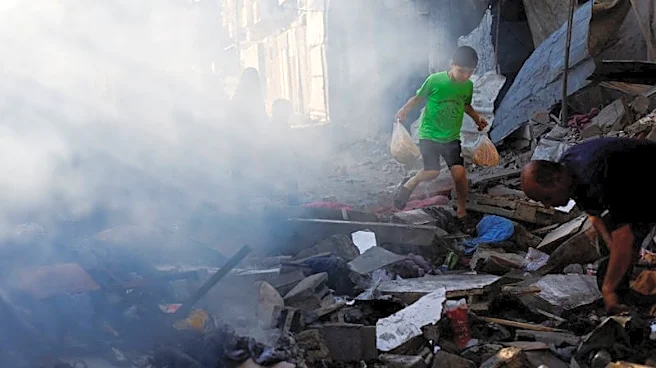
in governing Gaza post-Hamas. However, Palestinian Authority officials and those close to Dahlan have downplayed these reports, stating that the meeting was not part of any coordinated initiative or future appointment. They emphasized that Dahlan is not seeking a role in the Palestinian Authority or any plan that separates Gaza from the West Bank. Dahlan, who resides in the UAE, remains focused on humanitarian aid for Gaza, particularly in the Khan Younis area, through regional ties and contacts in the UAE.
Why It's Important?
The meeting and subsequent reports have stirred significant discussion within Palestinian political circles, highlighting the complex dynamics of leadership and governance in Gaza. The speculation around Dahlan's involvement underscores the ongoing challenges in finding a stable governance solution for Gaza, especially in the context of broader Israel-Hamas relations. The denial of any leadership role by Dahlan's camp reflects the sensitive nature of Palestinian territorial integrity and the political implications of separating Gaza from the West Bank. This situation also illustrates the intricate interplay of regional and international actors in Palestinian affairs, with potential impacts on future peace negotiations and humanitarian efforts.
What's Next?
While no immediate changes are expected following the meeting, the situation remains fluid, with various regional and international stakeholders likely to continue exploring potential governance solutions for Gaza. The Palestinian Authority's firm stance on maintaining Gaza's connection to the West Bank suggests that any future discussions will need to address these territorial concerns. Additionally, Dahlan's focus on humanitarian aid indicates that efforts to support Gaza's civilian population will continue, potentially influencing future diplomatic and political strategies in the region.