




What's Happening?
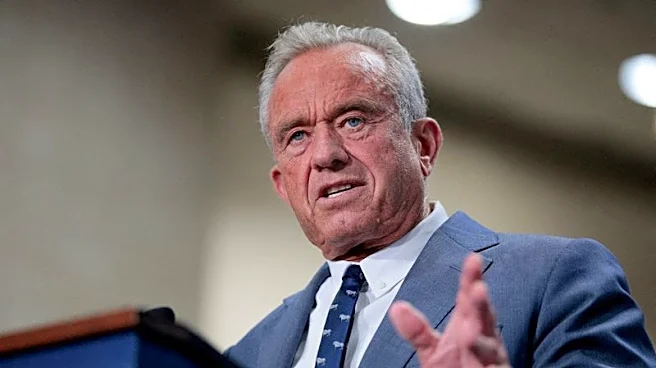
In August 2025, the federal health department canceled approximately $500 million in mRNA vaccine projects. This decision comes as Current Health Secretary Robert F. Kennedy Jr. has expressed skepticism regarding mRNA technology, citing concerns about
potential side effects associated with COVID-19 mRNA vaccines. The cancellation impacts ongoing research and development efforts in this field, which had previously been a significant area of focus, particularly following the success of mRNA platforms during the pandemic. The move reflects a shift in federal priorities and a more cautious approach to mRNA vaccine development under the current administration. This action has drawn reactions from various stakeholders, including Nobel Prize winners involved in mRNA vaccine development.
Why It's Important?
The cancellation of $500 million in mRNA vaccine projects by the federal health department carries significant implications for the U.S. biotechnology sector and public health strategy. This funding cut could slow down the development of new mRNA-based therapies and vaccines for various diseases, potentially impacting the nation's preparedness for future health crises. Companies and research institutions heavily invested in mRNA technology may face financial challenges and a 'brain drain' as researchers seek opportunities elsewhere. The skepticism from Health Secretary Robert F. Kennedy Jr. could also influence public perception of mRNA technology, potentially leading to decreased trust and uptake of future mRNA vaccines. This shift could also affect the global landscape of medical research, as other G20 countries may need to increase their contributions to medical research to sustain rapid advancements if U.S. funding diminishes.
What's Next?
The immediate consequence of the funding cuts will likely be a re-evaluation of ongoing mRNA vaccine projects across the U.S. research landscape. Research institutions and biotechnology companies that relied on federal funding for these projects will need to seek alternative financing or scale back their efforts. There may be increased advocacy from the scientific community and industry leaders to reinstate or reallocate funding, emphasizing the long-term benefits and potential of mRNA technology. Internationally, other G20 countries may be prompted to increase their investments in medical research to compensate for the U.S. funding reduction, potentially shifting the global leadership in this scientific domain. The debate surrounding the safety and efficacy of mRNA vaccines is also likely to intensify, influencing future policy decisions and public health campaigns.
Beyond the Headlines
The federal health department's decision to cut mRNA vaccine funding extends beyond immediate financial implications, touching upon deeper issues of scientific trust, public policy, and global health leadership. The skepticism voiced by a high-ranking health official could erode public confidence in scientific advancements, particularly in vaccine technology, which has been a cornerstone of modern medicine. This move might also signal a broader shift in how the U.S. government approaches emerging biotechnologies, potentially prioritizing certain research avenues over others based on political or ideological considerations rather than purely scientific evidence. Such a stance could have long-term consequences for the U.S.'s standing as a leader in biomedical innovation and its ability to respond effectively to future health threats, potentially ceding ground to nations that maintain robust investment in cutting-edge research.