






What's Happening?
The United States has declared new sanctions targeting an Iranian network accused of defrauding U.S. businesses to acquire technology for military purposes. The network, led by Ali Majd Sepehr, used fake websites and intermediaries to obtain advanced
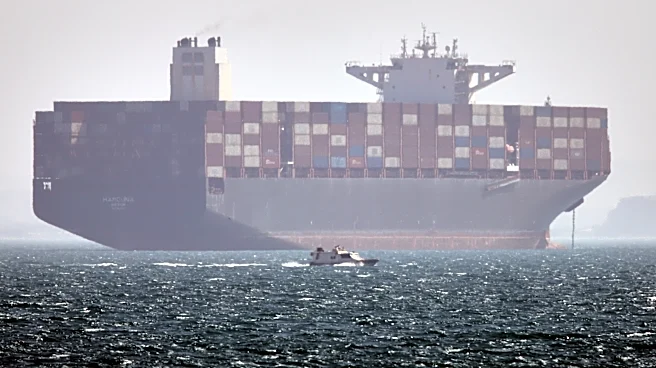
equipment for Iran's defense sector. The U.S. State Department is offering a reward for information disrupting the financing of Iran's IRGC. Additionally, the U.S. Treasury has amended its policies to ensure safe passage through the Strait of Hormuz, which remains unauthorized for U.S. entities. The sanctions also target Iran's Persian Gulf Strait Authority (PGSA), designated under counterterrorism authorities for supporting the IRGC. The PGSA has condemned the sanctions, viewing them as a sign of 'positive performance.'
Why It's Important?
These sanctions highlight the U.S. government's ongoing efforts to curb Iran's military capabilities and influence in the region. By targeting the PGSA and associated networks, the U.S. aims to disrupt Iran's ability to procure technology that could enhance its military strength. The sanctions also reflect broader geopolitical tensions, particularly concerning the strategic Strait of Hormuz, a critical chokepoint for global oil transportation. The U.S. actions could have significant implications for international trade and security, potentially affecting global markets and diplomatic relations with countries involved in the region.
What's Next?
The U.S. will likely continue to monitor and enforce these sanctions, seeking to prevent Iran from circumventing restrictions. The international community, including U.S. allies, will be watching closely to see how these measures impact Iran's behavior and regional stability. Further diplomatic efforts may be necessary to address the underlying tensions and explore potential avenues for negotiation and conflict resolution.