



What's Happening?
Drydocks World, a subsidiary of the Dubai-owned ports and logistics group DP World, has entered into a contract with Dixstone Lower Gulf FZCO to convert an LNG carrier into a floating storage unit (FSU) for Gabon's offshore gas development. This engineering,
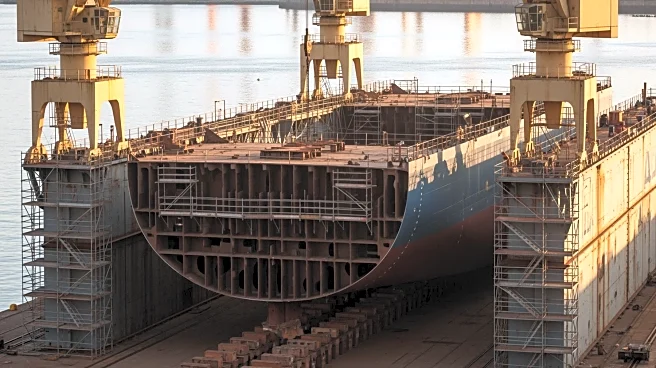
procurement, and construction project will transform the LNG carrier into the FSU Cap Lopez, which will support Gabon's floating LNG development by facilitating offshore gas liquefaction, storage, and export. The project aims to reduce gas flaring and increase Gabon's gas production capacity by approximately 105 million standard cubic feet per day. The scope of work includes the fabrication of over 700 tonnes of new steel, installation of about 3 kilometers of piping, and integration of a 1,400-tonne boil-off gas module and a 350-tonne electrical house. The project also involves full vessel drydocking, tank coating, and life-extension works, all under the classification of Lloyd's Register. The sail-away of the converted unit is scheduled for July 2027.
Why It's Important?
This project is significant as it represents a strategic move to enhance Gabon's energy infrastructure and production capabilities. By converting an LNG carrier into a floating storage unit, Gabon can better manage its natural gas resources, reduce environmental impact through decreased gas flaring, and boost its production capacity. This development aligns with global efforts to transition to more sustainable energy solutions. For Drydocks World, this project underscores its capability to deliver complex LNG conversions, reinforcing its position in the global energy sector. The project also highlights the growing importance of floating LNG solutions in meeting energy demands while minimizing environmental footprints.
What's Next?
The completion of this project is expected by July 2027, with the converted FSU Cap Lopez set to play a crucial role in Gabon's offshore gas operations. As the project progresses, stakeholders will likely monitor its impact on Gabon's energy production and environmental goals. The successful execution of this project could lead to further collaborations between Drydocks World and other energy companies seeking similar solutions. Additionally, the project may influence regional energy strategies, encouraging other nations to adopt floating LNG technologies to enhance their energy infrastructure.